Gothic Style Pulpit Railing
Gothic-style pulpit railing with open arches resting on turned columns, separating the chancel from the nave without blocking the view of the altar.
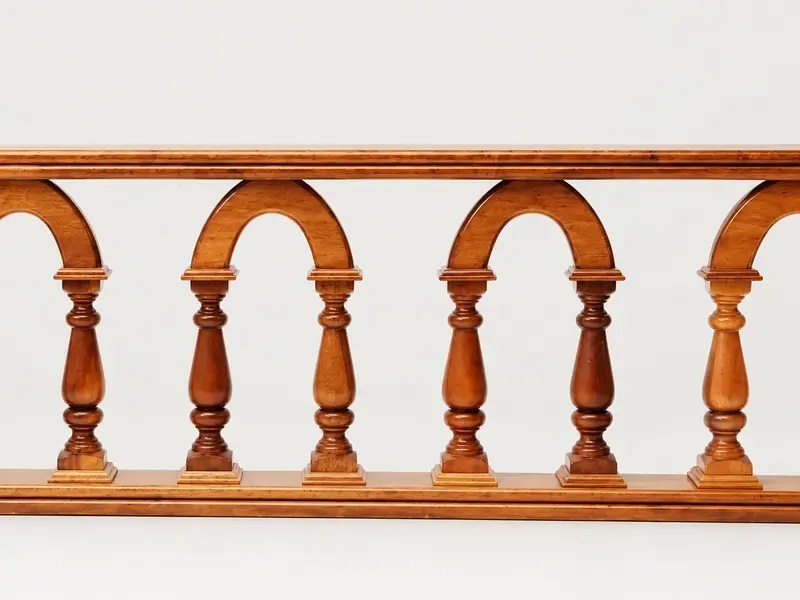
The Gothic-style pulpit railing from Móveis Zanovello is a low wooden partition that marks the boundary of the pulpit, altar or choir area, separating it from the nave. It is custom-made in Lyptus to fit the width of the church front, with arches resting on turned columns.
What each part of the Gothic railing does
- Open arches on paired columns: enclose the pulpit area without forming a wall. Those seated in the pews can still see the altar and preacher through the openings, while the arches echo traditional church architecture.
- Molded top rail: finishes the railing and forms a barrier at the edge of the raised chancel above the nave.
- Continuous floor-level base: connects all the columns into one stable piece and marks where the worship leaders' area begins.
- Corner post with turned finial: reinforces the ends and changes in direction, where bumps are most likely, and finishes the railing beside the wall or stairs.
Which church interiors suit the Gothic railing
It suits churches with traditional architecture, arched windows, a classic pulpit or wooden pews with molding. It coordinates with the carved Gothic pulpit, the Gothic pulpit without carving and the Gothic organ enclosure, which repeat the arches. In simpler interiors, or when the church wants a more understated railing, the turned-baluster pulpit railing, with balusters only, is a better fit. Both are in the pulpit railings category.
How to order the railing
The railing is sized to the front of your church. Send our team a WhatsApp message with the width of the pulpit area or chancel, where the railing turns corners or leaves openings, the wood tone of the pews or pulpit and your city. A floor plan or photo of the sanctuary front helps, if available. The number of arches follows the length, and the height is defined in the written proposal, along with pricing and lead time. The railing is made in Lyptus at the Móveis Zanovello factory in Floreal/SP and can be included in the same project as the pews through your quote.
What is the pulpit railing for?+
The railing marks the boundary of the pulpit, altar or choir area, separating it from the pews. It organizes the front of the church and forms a barrier at the edge of the raised chancel.
Does the Gothic railing block the view of the altar?+
No. The arches are open and rest on slender columns, so those seated in the pews can still see the altar and preacher through the railing.
How is the pulpit railing sized?+
Móveis Zanovello calculates the length based on the width of the pulpit area or chancel, with the number of arches adjusted accordingly. The height and corner layout are defined in the proposal using the measurements provided by the church.
What is the difference between Gothic and turned railings?+
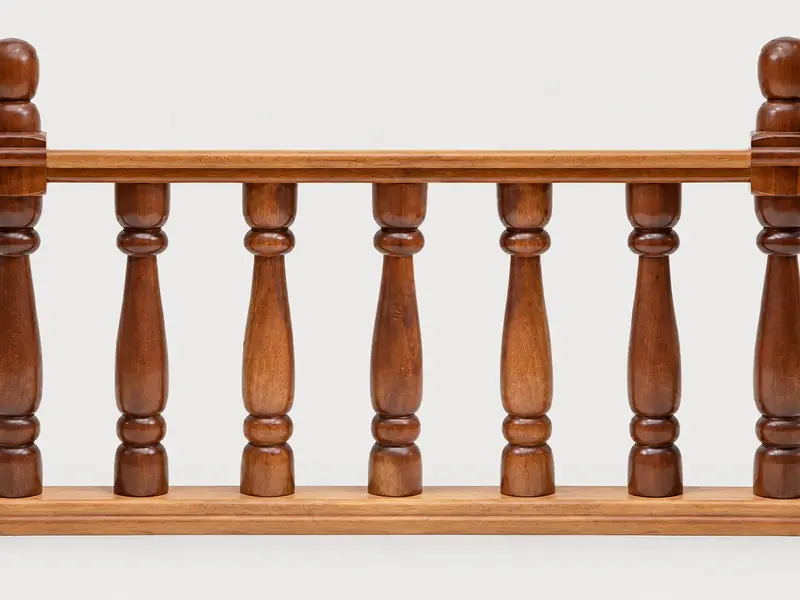
The Gothic railing has arches supported by pairs of turned columns and suits traditional sanctuaries. The turned railing has only side-by-side balusters, without arches, and pairs with almost any pulpit style.
Does the railing match the pulpit?+
It pairs with Zanovello's Gothic pulpits, which repeat the arches. Made in Lyptus with the same finish color, the railing, pulpit, and pews create a coordinated set at the front of the church.