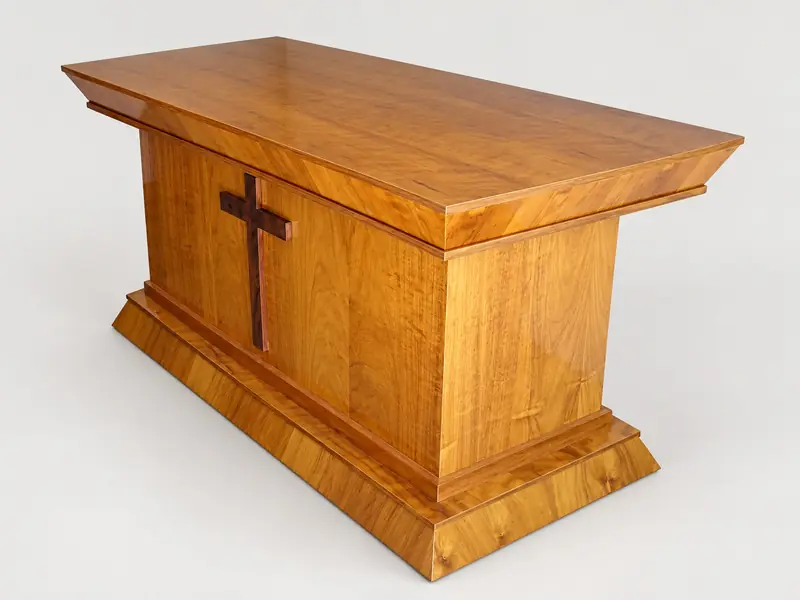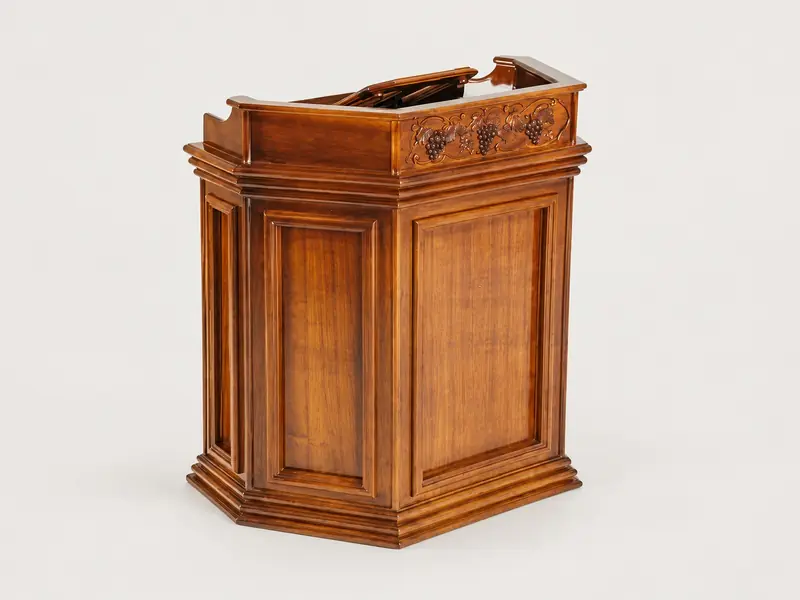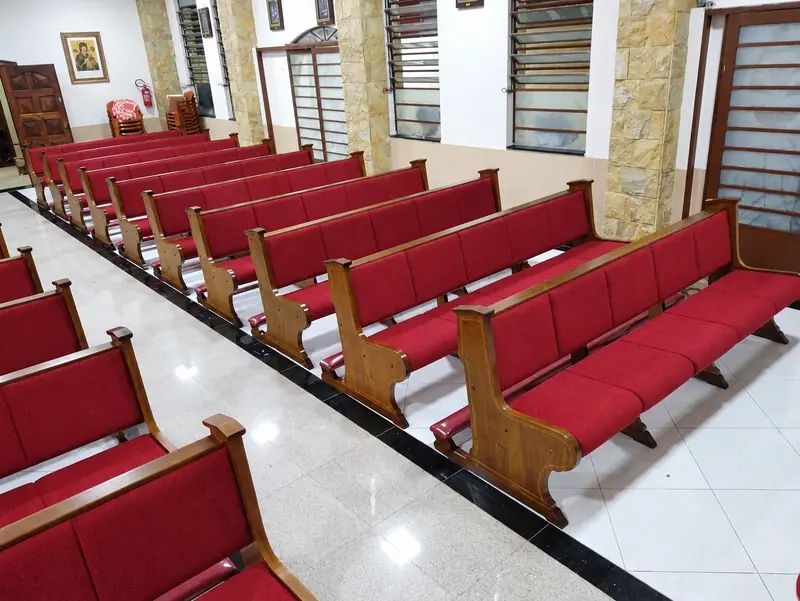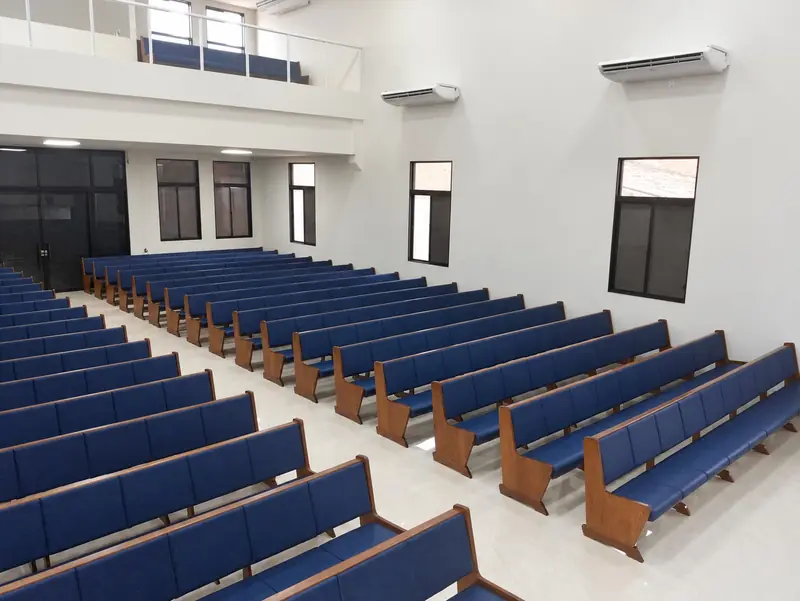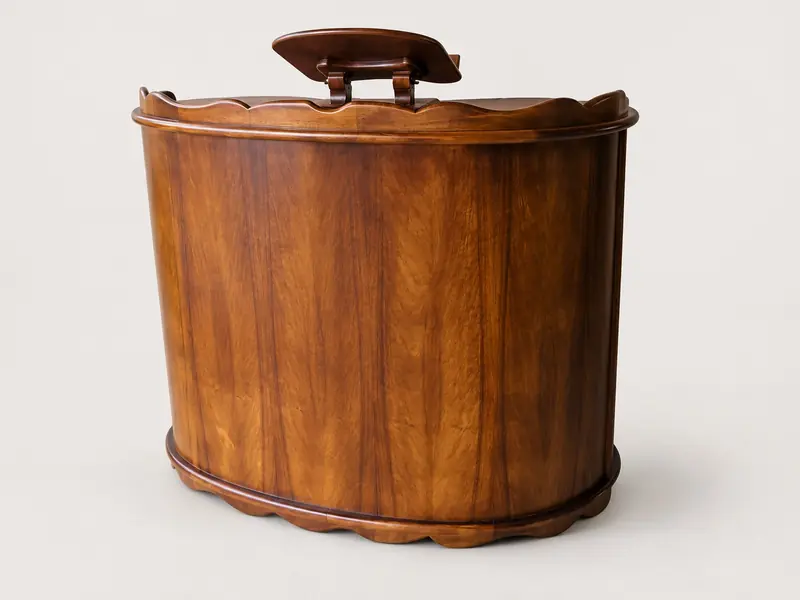
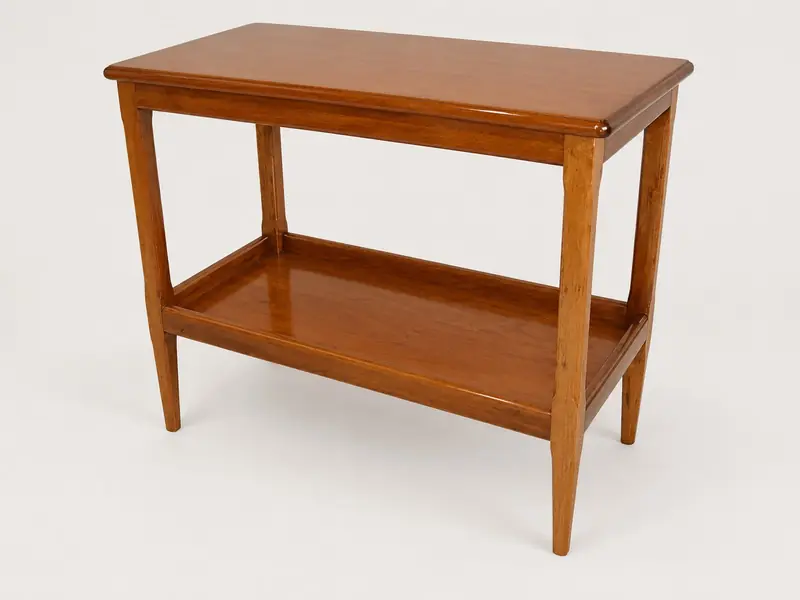
The communion table is the wooden piece of furniture that holds the elements of the Lord's Supper during the celebration, the bread and the cup. It usually stands in front of the pulpit or at the center of the altar area, where the entire congregation can see it. Its size should be proportional to the altar area, with a finish that matches the pulpit and sanctuary pews.
This article covers the furniture used in worship. It was written by Móveis Zanovello, a church furniture manufacturer in Floreal/SP since 1965, for pastors, deacons, and building committees choosing or ordering a communion table.
What a communion table is used for
The Lord's Supper is celebrated in remembrance of Jesus' last meal with his disciples. The apostle Paul records its institution in 1 Corinthians 11:23 to 26, with the bread, the cup, and the command "do this in remembrance of me."
During the celebration, the table brings together everything that will be served:
- the trays of bread;
- the cup or trays of individual cups;
- the cloth covering the elements before distribution;
- in some churches, the Bible opened to the passage instituting the Lord's Supper.
The way communion is celebrated varies widely among denominations: how often it takes place, who serves, whether the congregation comes forward or receives it in the pews, and what goes on the table. That is why the table should be chosen according to your church's practice.
Where it goes in the sanctuary
The two most common locations are:
- In front of the pulpit, at floor level or on the first step of the altar area, facing the congregation.
- At the center of the altar area, when there is enough space between the pulpit and the edge of the platform.
Visibility is the main consideration. The table needs to be visible from every row, including the sides and balcony. It also needs enough clearance around it for pastors, elders, or deacons to approach, pick up the trays, and go out to serve without bumping into one another.
Some churches leave the table in the altar area every Sunday, holding the Bible, flowers, or offerings. Others bring it forward only on communion day. Both approaches work, provided the space has been considered in the altar area design.
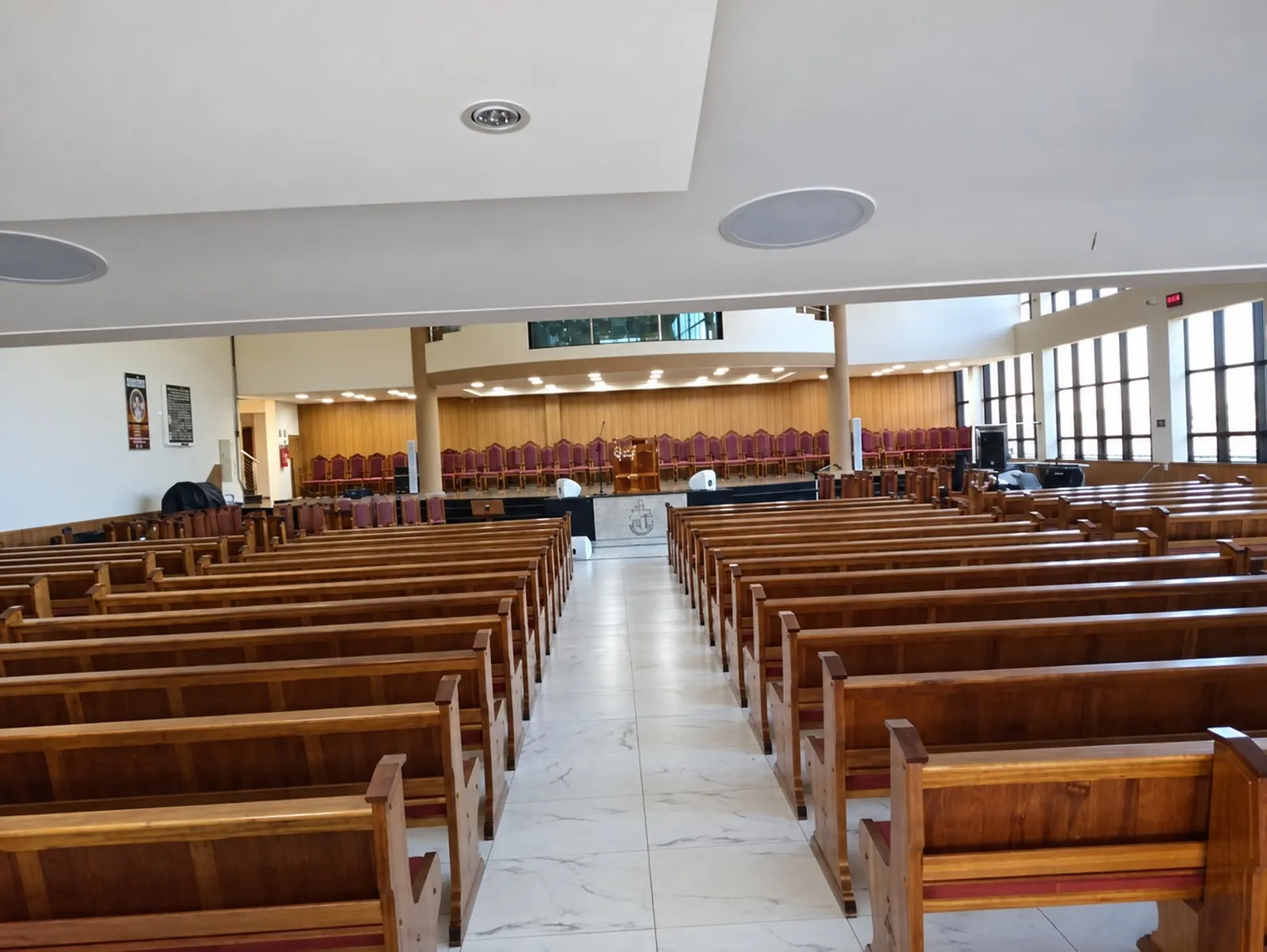
Size and proportion relative to the altar
There is no single standard size for a communion table. The right size depends on three factors:
- what goes on it: how many trays of bread and cups the church uses for communion;
- the size of the altar area: an oversized table crowds the platform, while an undersized table gets lost in front of the pulpit;
- the height of the other furniture: the table looks right when its height works with the pulpit and clergy chairs.
A practical way to decide is to count the trays currently used, place them side by side on the floor where the table will stand, and measure. With those measurements and a photo of the altar area, the factory team can suggest a proportional length, width, and height. If the congregation is growing, also count the trays the church expects to use in the coming years.
Communion table styles
Styles follow the rest of the furniture:
- Simple lines: a top with rounded edges and straight legs, without carving. Works with almost any pulpit style.
- Enclosed design: a table with an enclosed body, a wide top, and a symbol on the front, such as a cross. Has a stronger presence in the altar area.
- Carved: curved legs and a decorative apron, for traditional sanctuaries.
In every case, it is worth choosing the table together with the pulpit or lectern so the altar area has matching wood and color.
Zanovello communion table
The communion table from Móveis Zanovello is made from Lyptus® (eucalyptus hardwood) grown in planted forests, the same wood used for the factory's pews. The model features:
- a rectangular top with rounded edges and corners;
- four straight, tapered legs, with simple lines;
- a lower shelf with a raised edge, which holds extra trays, cups, and cloths without letting them slide off;
- a varnished finish in the same shade as the pews and pulpit, agreed upon in the proposal.
The lower shelf helps the deacons or congregation members who serve: replacement items stay within reach without a second table in the altar area. The length, width, and height are defined in the proposal according to the altar area and the quantity of elements served. A symbol on the front of the tabletop, such as a cross, can also be arranged.
For churches wanting a larger, enclosed piece, the straight-line altar table also serves as a communion table in evangelical churches. The Ambão Videira, with carved grape clusters, complements the communion theme for those wanting a preaching lectern with a symbol.
How to order it with other furniture
The communion table can be ordered on its own or together with the rest of the altar furniture. Here is how:
- Send the item name, the church's city, and a photo of the altar area to the accessories team on WhatsApp.
- Tell them how many trays the church uses and how much space is available.
- If you want a matching pulpit, chairs, or ambo, request everything in the same conversation.
- Receive a written proposal with the price, dimensions, and timeframe.
For an overview of everything the sanctuary needs, from the pulpit to the pews, read furniture for evangelical churches. Other items in the range are listed under other church furniture.
Next step
Order the communion table through the accessories team on WhatsApp, with no minimum order, and the Zanovello team will respond with a written proposal. If the church is also replacing its pews, start with Build your quote and request the table as part of the same project, with the same finish. The pews come with a 7-year written warranty and a minimum order of 20 pews.