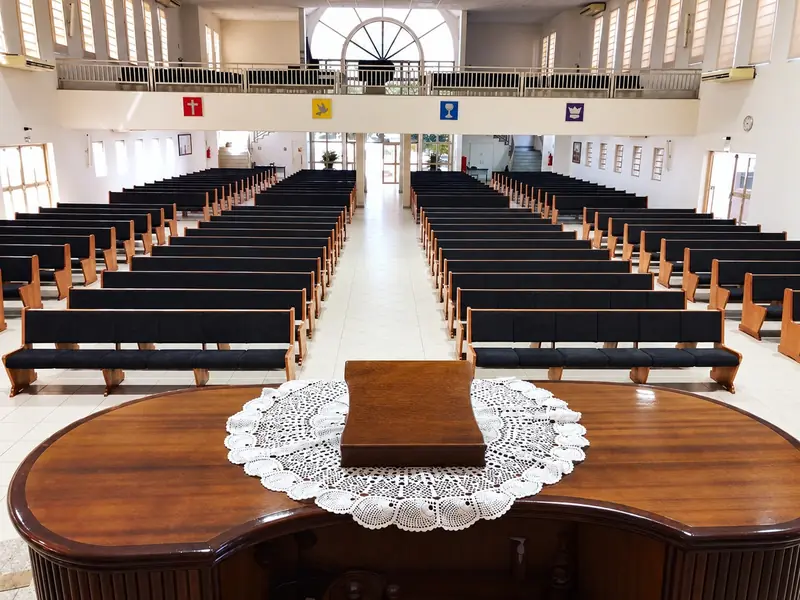
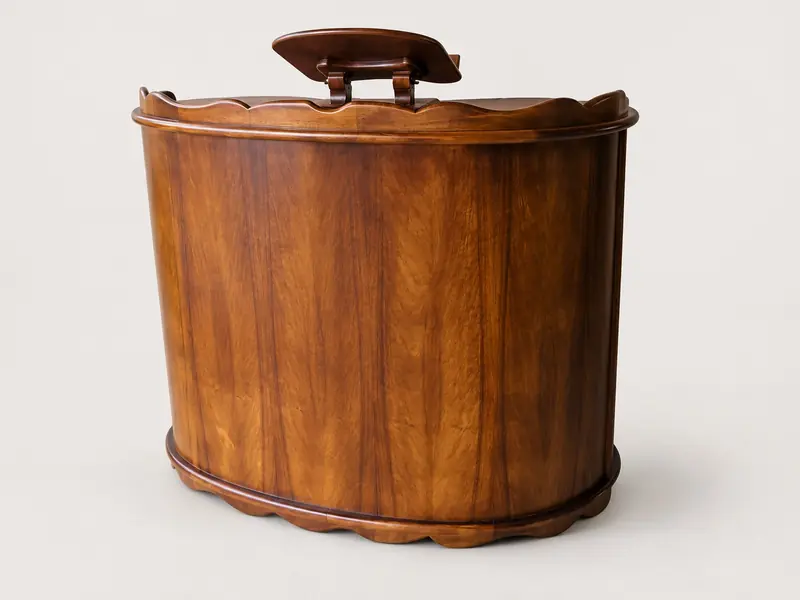
To choose a church altar, first define the size of the sanctuary or platform, the church's style, and which pieces will make up the set, such as a table, ambo or lectern, credence table, and clergy chairs. Móveis Zanovello makes custom-made altar tables and accompanying furniture in Lyptus wood to match the pews.
The altar is where the entire congregation looks during worship or Mass. When planned together with the pews, it gives the church a unified look. Here is what the committee, priest, or pastor needs to decide, in the order these decisions usually arise.
Altars in Catholic and evangelical churches
The word "altar" has different meanings depending on the tradition.
In the Catholic church, the altar is the table where the Eucharist is celebrated. The General Instruction of the Roman Missal (GIRM) addresses the altar in paragraphs 296 through 308. Two points matter when choosing the furniture:
- Fixed or movable altar (GIRM, no. 298). Every church should have a fixed altar, attached to the floor so it cannot be moved. In other places designated for celebrations, a movable altar may be used.
- Altar set apart from the wall (GIRM, no. 299). The altar should be built away from the wall so that people can walk around it and Mass can be celebrated facing the people. It should occupy a place that draws the attention of the entire assembly.
Because these guidelines involve liturgy and architecture, the final decision involves the parish priest, the diocesan sacred art committee where one exists, and the architect. The factory's role is to make the piece in the agreed size and style.
In evangelical churches, "altar" often refers to the platform or raised area at the front of the worship hall, where the pulpit, clergy chairs, and often the communion table are located. The table holds the Bible, communion elements, flowers, or offerings. To understand each part of the space, read sanctuary, altar, and credence table.
Altar table and sanctuary dimensions
The right altar table size depends on the sanctuary or platform, how many people stand around it, and what goes on top. Móveis Zanovello therefore specifies the length, width, and height in the proposal based on measurements supplied by the church. When requesting a quote, it helps to send:
- the width and depth of the sanctuary or platform;
- the height and location of the steps;
- the locations of the ambo or lectern, credence table, and clergy chairs;
- a photo of the space, even if it is still under construction.
For Catholic churches, keep GIRM no. 299 in mind: the space around the altar must allow people to walk around it. Confirm the layout with the parish priest and architect before finalizing measurements.
Styles: straight lines, carved, and Provençal
The altar's style usually follows the pews and the architecture:
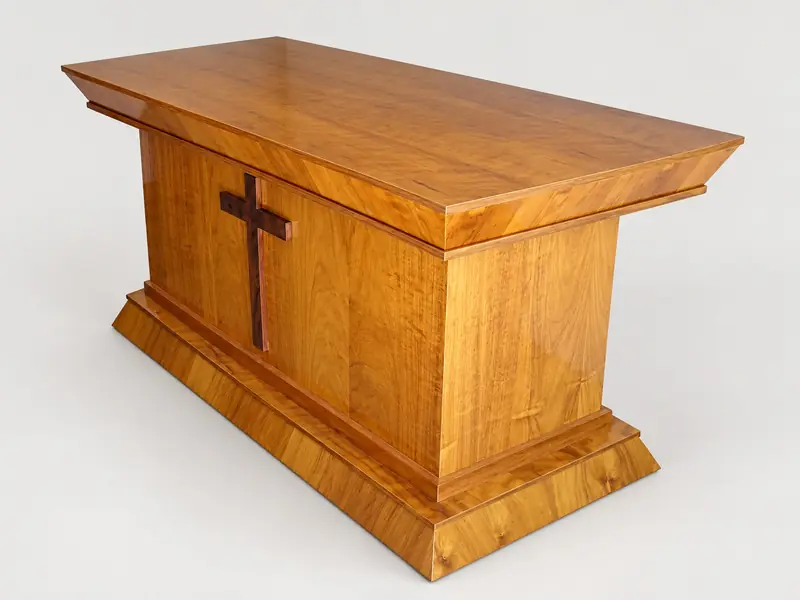
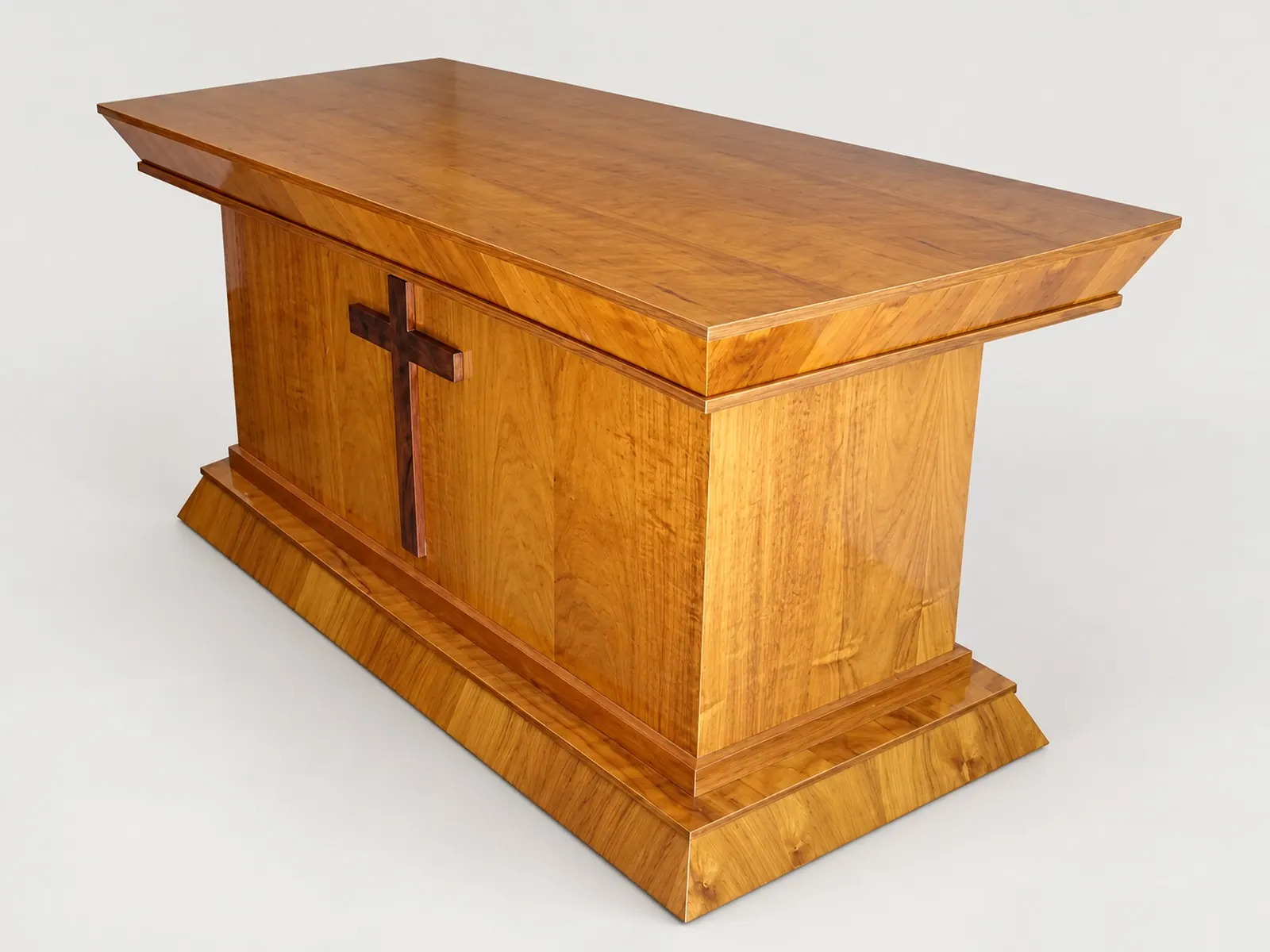
- Straight-line: the straight-line altar table has a wide rectangular top, an enclosed body with no visible legs, a cross mounted on the front, and a stepped base. It suits modern churches, chapels, and sanctuaries seeking an understated table.
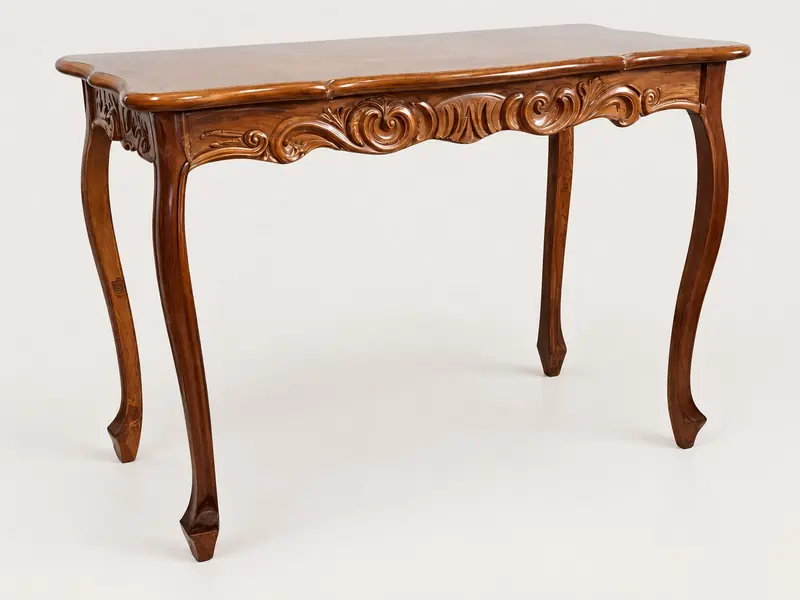
- Carved: the carved credence table has Louis XV legs, a shaped top, and an apron with scrolls and foliage for traditional sanctuaries.
- Provençal: the carved Provençal lectern and Provençal armchair share the same curved-leg style.
Altar for a simple church
A small church, chapel, or new congregation does not need a fully furnished sanctuary all at once. A simple altar can consist of a straight-line table without carving, a matching lectern, and two clergy chairs. Later, a credence table, ambo, or other pieces can be ordered in the same finish tone, because Zanovello's entire line is made from Lyptus.
Pieces that accompany the altar
A fully furnished sanctuary rarely has just one piece. The pieces most often ordered with the table are:
- Ambo or lectern, for readings and preaching. See pulpit, lectern, or ambo and the Oval Ambo.
- Credence table, the side table beside the altar that holds the chalice, cruets, and books before they are placed on the altar table.
- Presider's chairs, such as the PB01 carved button-tufted chair, for the presider, and chairs for assistants.
- Communion table, in evangelical churches. Zanovello's communion table has a lower tray; also read communion table.
- Railings and microphone stand, when the altar area has a balustrade or space for testimonies.
Altar and pews in matching finishes
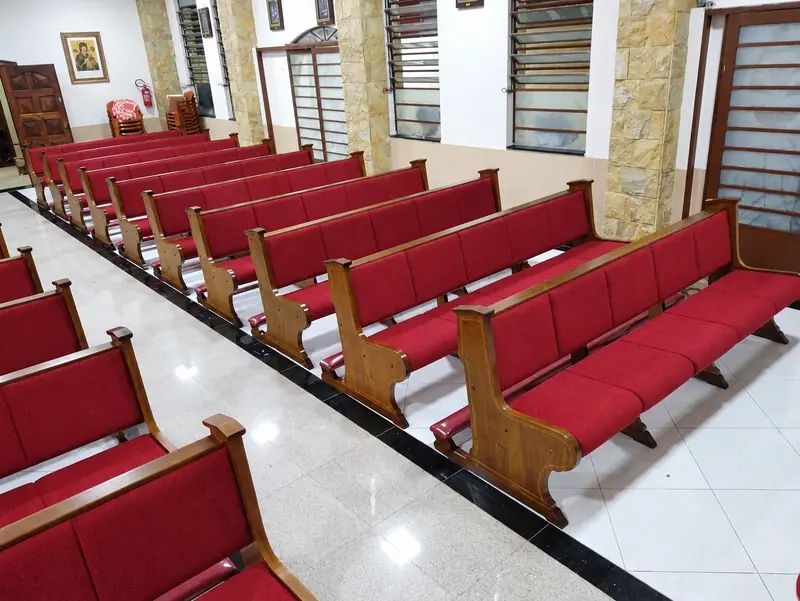
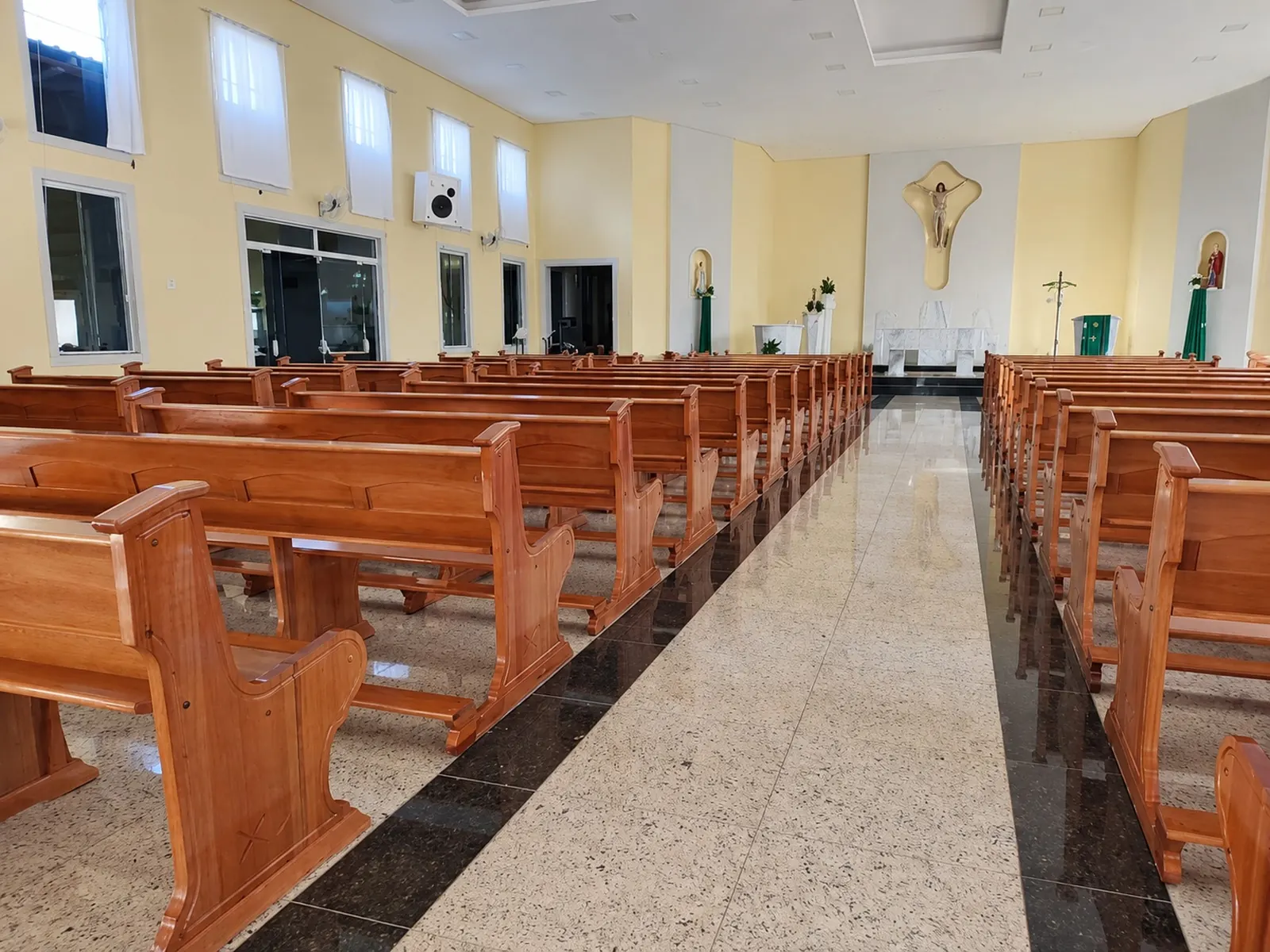
Móveis Zanovello uses only Lyptus, plantation-grown eucalyptus hardwood, for its pews and all accompanying furniture. This allows the altar to have the same finish tone as the pews, giving the sanctuary a consistent wood color from the first pew to the table.
At Paróquia São José, in Americana/SP, Z-01 wooden church pews with carved backs and engraved fish fill the nave in two sections leading to the light-colored sanctuary. It is the kind of setting where the pew finish guides the choice of altar furniture.
Zanovello altar tables
A summary of the factory's table options:
- Straight-line altar table: enclosed body with a cross on the front, for Mass or Holy Communion.
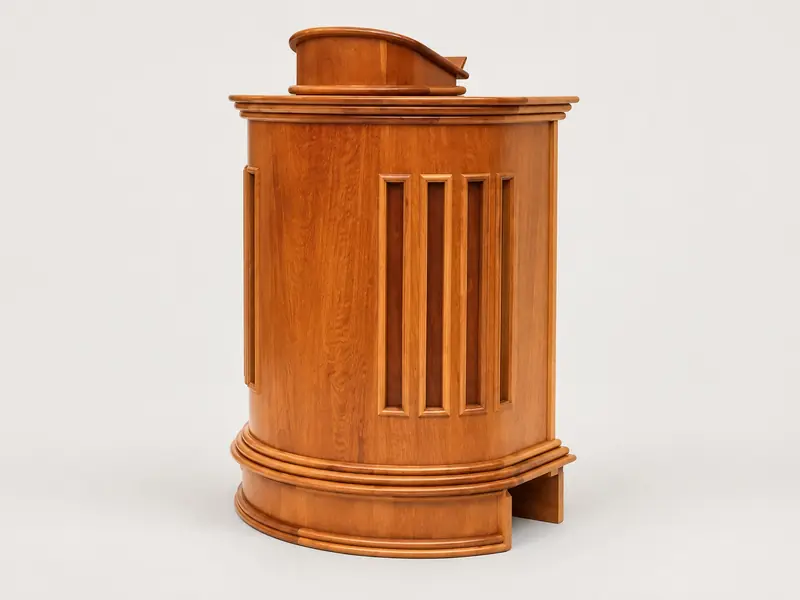
- Altar table and pulpit: a curved-front piece with a U-shaped opening at the back and an adjustable reading stand, used as the main pulpit or, in parishes, as a stand for proclaiming the Word.
- Carved credence table: the side table beside the altar.
- Communion table: simple lines with a lower tray.
The cross on the straight-line altar table can be replaced with another church symbol, agreed upon before manufacturing. See all pieces under altar and ambo.
Next step
Altar orders are handled through Zanovello's accessories WhatsApp: send the piece name, the church's city, the sanctuary platform measurements, and a photo. The quote includes pricing and lead time in writing. If the church is also replacing its pews, start with Build your quote: the altar becomes part of the same project with the same finish, and the pew quote includes a 7-year written warranty.