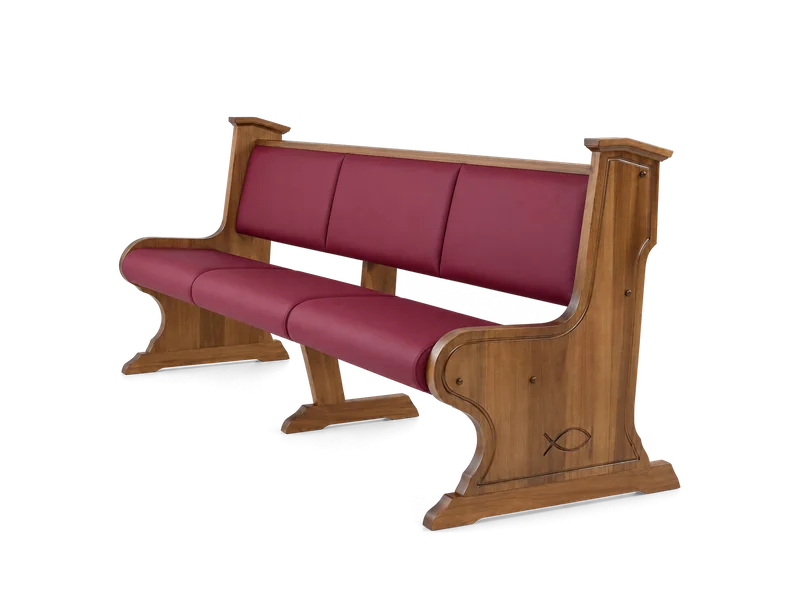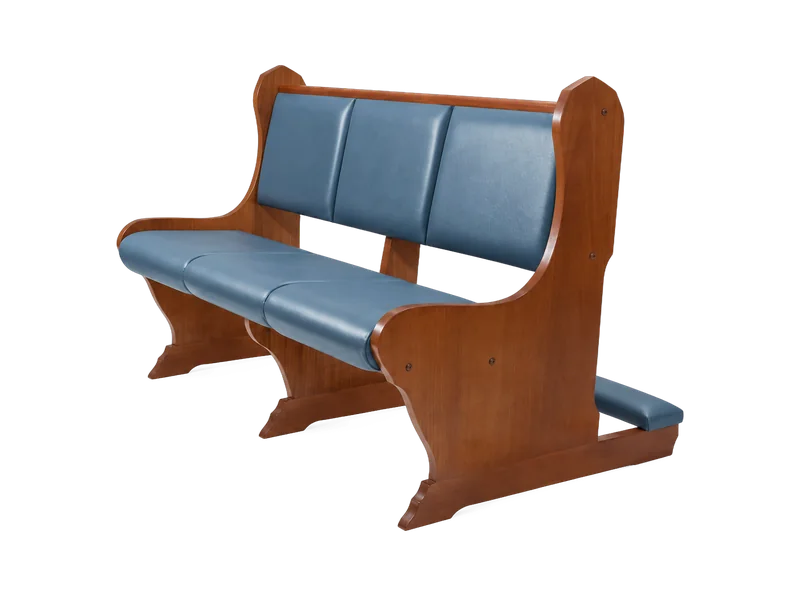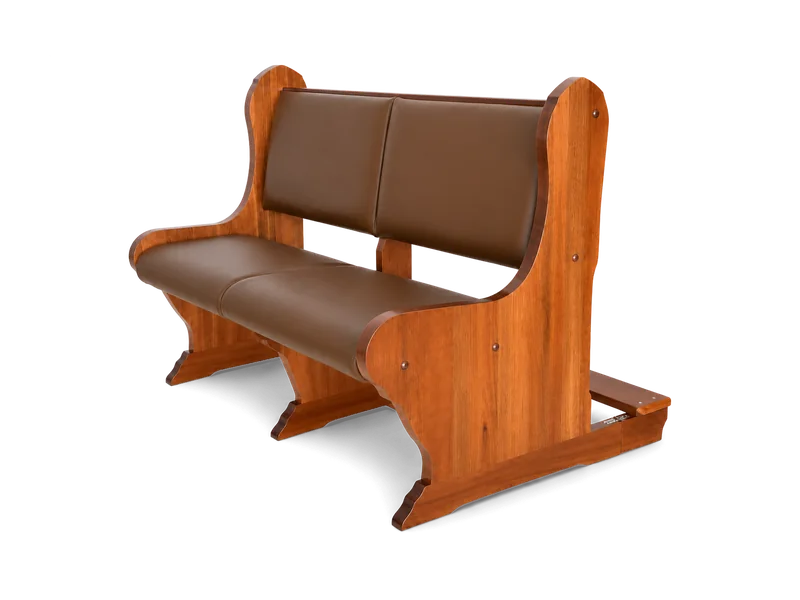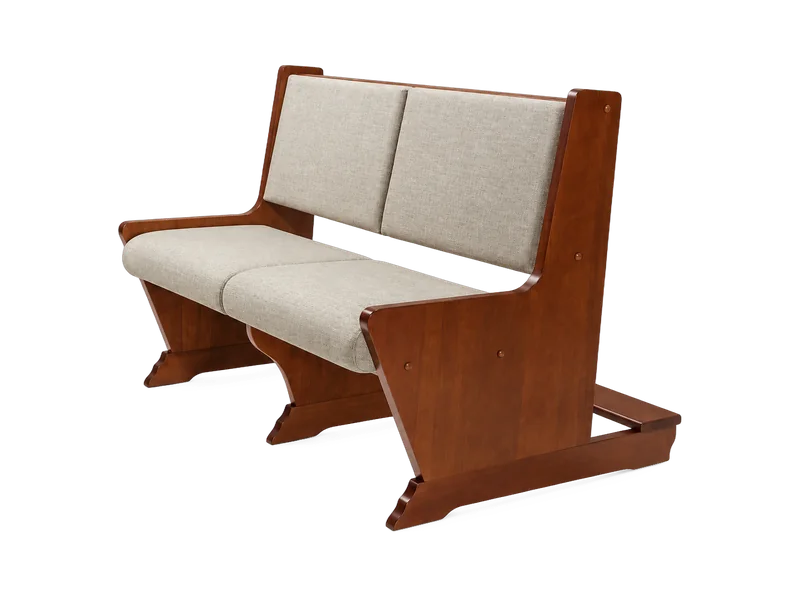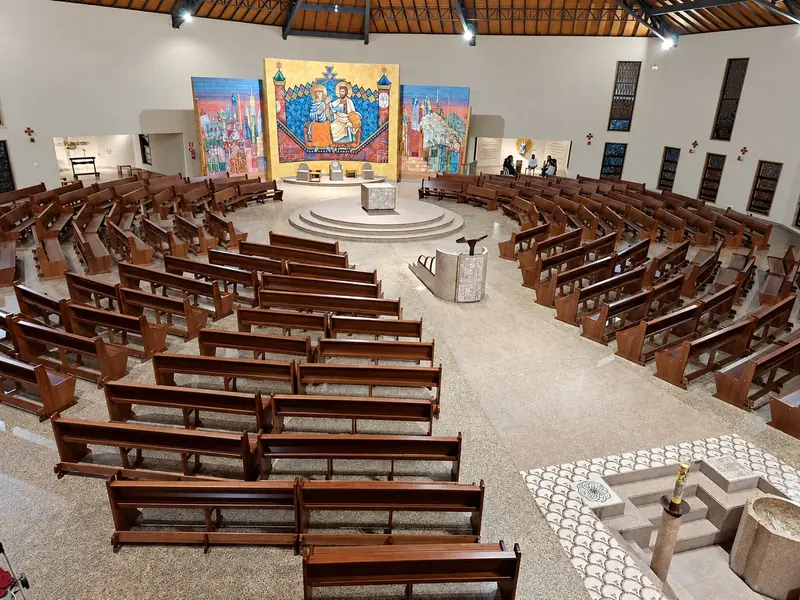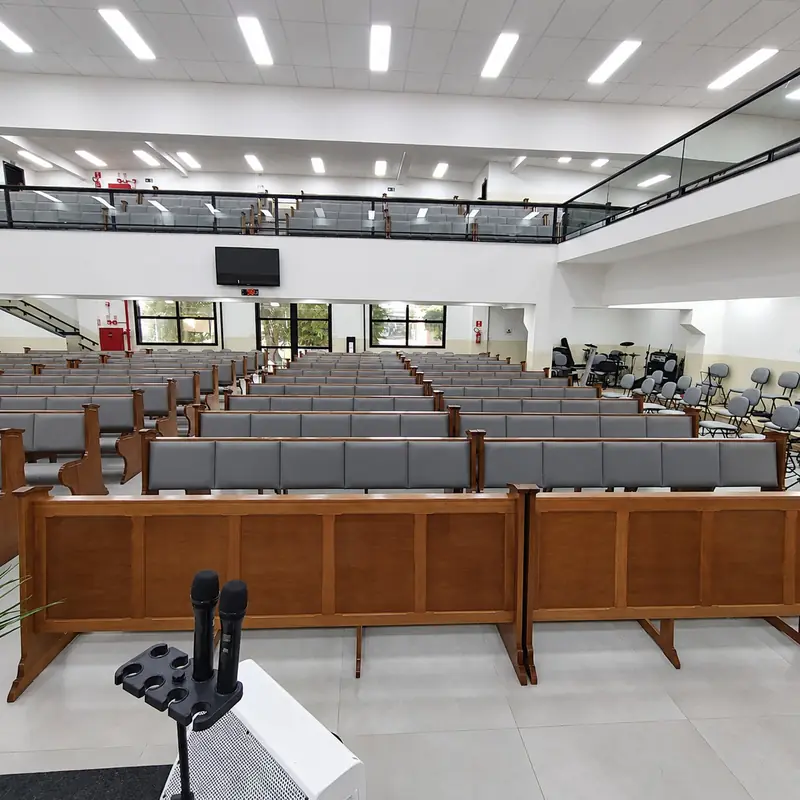
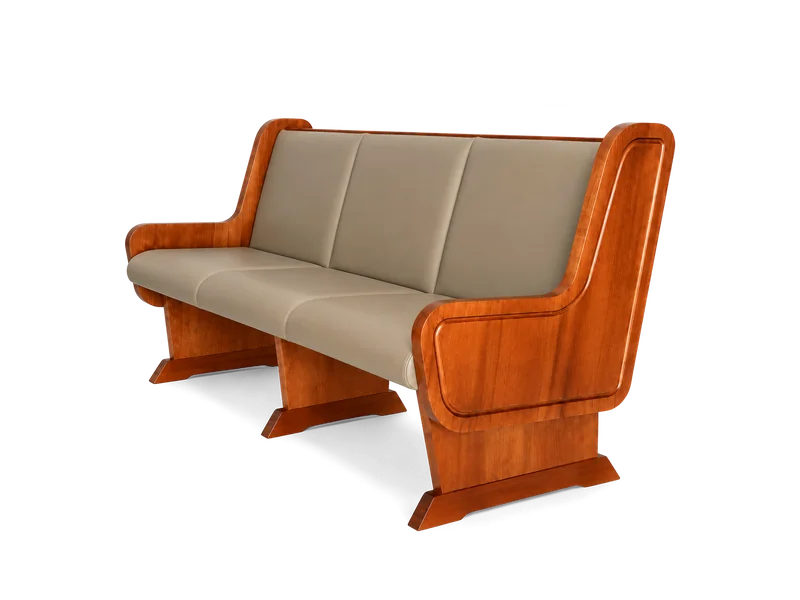
When choosing church pew upholstery, the two most common options are fabric and faux leather: faux leather is easier to clean with a damp cloth, while fabric generally feels cooler and softer. At Móveis Zanovello, pews are upholstered in fabric or faux leather, in colors such as beige, gray, burgundy, blue, and brown, as agreed upon in the proposal.
The choice may seem like a detail, but the church will live with it for many years, at every service. This guide brings together what our factory team observes in church projects to help the building committee decide.
Fabric and faux leather: practical differences
Faux leather is a synthetic upholstery material with a smooth surface that looks similar to leather. Fabric is made of interwoven threads, has texture, and feels softer. Both work well for church pews. The differences show up in everyday use:
- Feel: faux leather is smooth and slightly firmer; fabric is softer and textured.
- Cleaning: faux leather can be wiped with a damp cloth and dries quickly; fabric needs vacuuming and careful stain treatment.
- Temperature: fabric usually stays cooler on hot days; faux leather can feel warm with prolonged contact.
- Appearance: faux leather has a slight sheen and makes visible stitching stand out; fabric has a more matte, welcoming look.
These differences are general guidelines. Each fabric and faux leather has its own characteristics, and our team explains the available options when preparing your proposal.
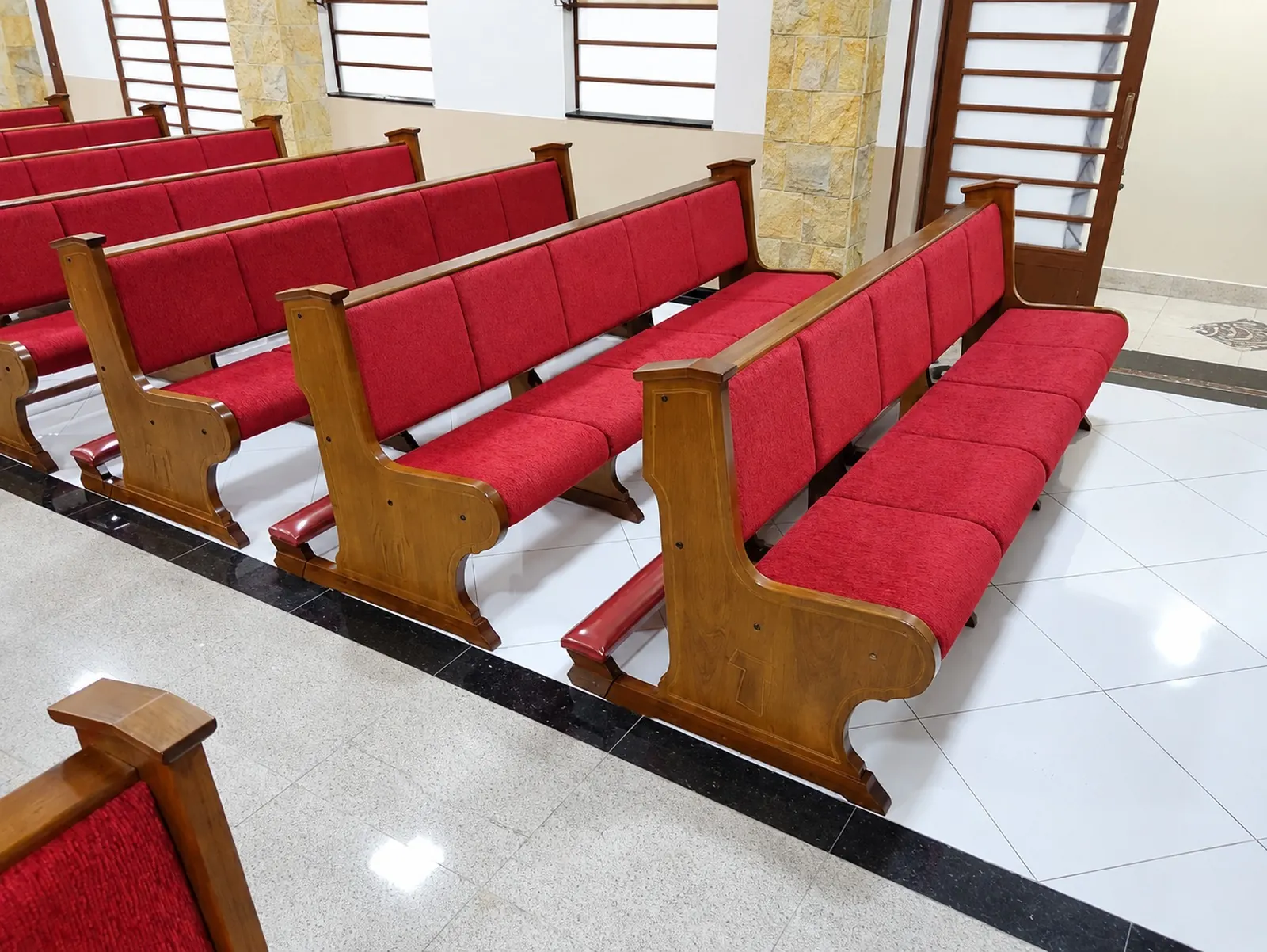
In Zanovello's catalog photos, the Z-Roma is shown in sand-gray faux leather with visible stitching, and the Z-Elegance in burgundy faux leather, also with visible stitching. Some churches have chosen fabric, such as Paróquia Sagrada Face, in São Paulo/SP, with Z-Elegance pews in red fabric.
For models with upholstered kneelers, such as the Z-Especial and Z-Florença, the kneeler upholstery is also part of the discussion. It comes into contact with knees and shoes brushing past between rows, so it is worth choosing its material along with the seat and back upholstery, keeping cleaning in mind.
Local climate and sanctuary ventilation
Climate plays a bigger role in the choice than many people realize. A few questions can help:
- Does the sanctuary have air conditioning? With temperature control, faux leather works well, and easy cleaning is a plus.
- Is the city hot, and does the worship hall rely on fans and windows? In that case, fabric is usually more comfortable during long services.
- Are services long? The longer people sit, the more the feel and temperature of the upholstery matter.
- Does direct sunlight reach some rows? Consider the color and material of those pews carefully, because sunlight heats the seats and fades colors over time.
Everyday cleaning
Routine cleaning is where faux leather usually has an advantage. Zanovello's care recommendations for upholstered church pews:
- Faux leather: wipe with a damp cloth and mild soap, then dry immediately.
- Fabric: vacuum frequently and treat stains with a slightly damp cloth, without soaking.
- Wood sides and backs: use a soft cloth, without alcohol or solvents.
Churches with many children, a snack area near the worship hall, or services and activities throughout the week tend to prefer faux leather for quick cleaning. For complete instructions, read how to clean upholstered church pews.
How to choose an upholstery color
Upholstery color fills much of the view when someone enters the sanctuary. A simple approach for the building committee:
- Start with the floor. It is the largest surface in the worship hall and is already chosen in most projects.
- Look at the walls and chancel. The upholstery color should coordinate with the altar, pulpit, and doors.
- Choose the wood finish tone at the same time. Beige with dark wood, for example, creates contrast; gray with medium-toned wood looks more subdued.
- Think about maintenance. Very light colors show marks more easily; medium tones better conceal everyday wear.
- Consider the church's identity. Many churches use an upholstery color that is already part of the congregation's history.
The article on church pew colors takes a closer look at coordinating wood finish, upholstery, and flooring.
Colors available at Zanovello
Móveis Zanovello offers fabric or faux leather upholstery in beige, gray, burgundy, blue, brown, and other colors agreed upon in the proposal. The projects documented on the website show how each color looks in an actual sanctuary:
- Beige: CCB Palestina/SP with Z-Elegance and CCB Altamira/PA with Z-Florença.
- Gray: CCB Floreal/SP with Z-Especial and CCB New Jersey, in the United States, with Z-Florença.
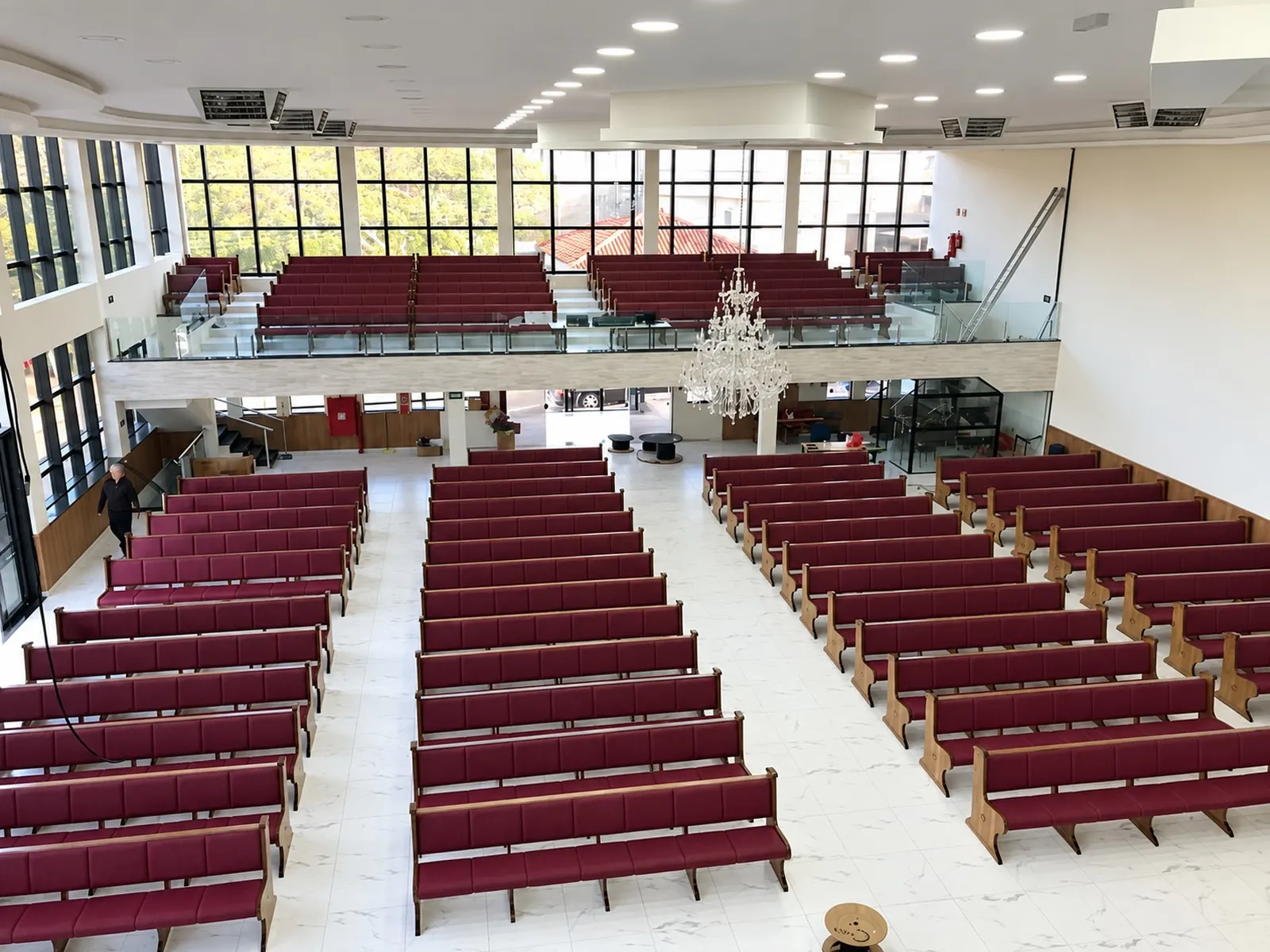
- Burgundy: Assembleia de Deus de Itapeva/SP with Z-Elegance and the church's symbol engraved on the side.
- Blue: Igreja Batista de Cumaru/PE with Z-Comfort.
- Brown: Paróquia Santa Cândida, in São Paulo/SP, with Z-Comfort.
- Caramel: CCB Marapoama/SP with Z-Elegance.
- Beige with curved side panels: CCB Ariranha/SP with Z-Barcelona.
How to request a color sample
Seeing the color in person, under the sanctuary's lighting, helps avoid surprises. Since fabric or faux leather sample availability depends on the material and timing, arrangements to view the color before finalizing your order are made with our team on WhatsApp. In the meantime, the building committee can:
- build a quote using Build your quote, choosing the upholstery color in the configurator;
- browse Zanovello's completed church projects and find a church with the desired color;
- send our team a photo of the floor and altar for suggestions on coordinating colors.
Next step
With a model and color in mind, build your quote or contact our team on WhatsApp. The Móveis Zanovello proposal specifies the fabric or faux leather, color, length of each pew, price, timeline, and 7-year written warranty. The pews are manufactured in Floreal/SP, with a minimum order of 20 pews. In Brazil, our own team installs them; abroad, pews are shipped unassembled, without installation. See all upholstered church pews.