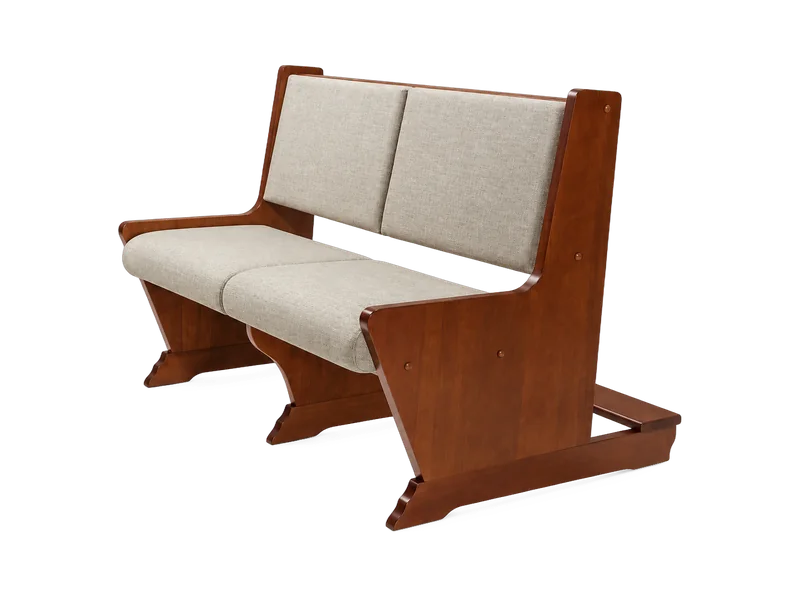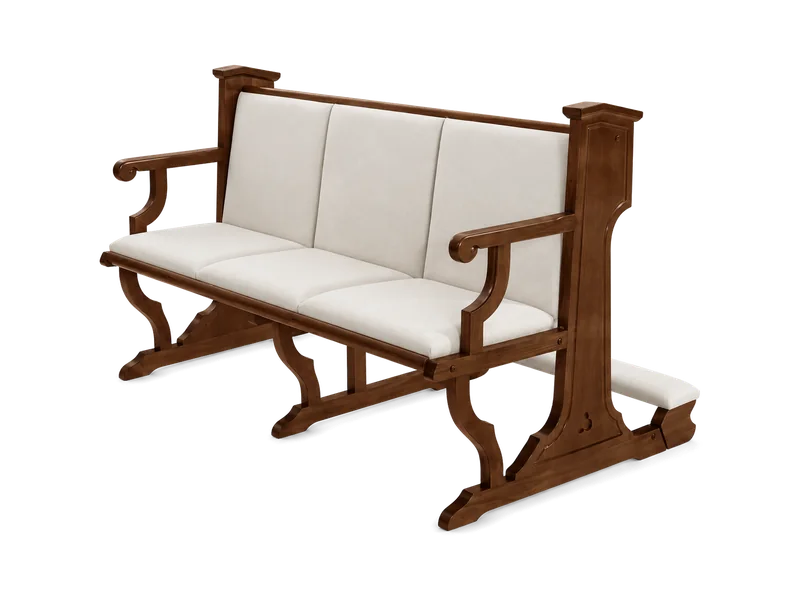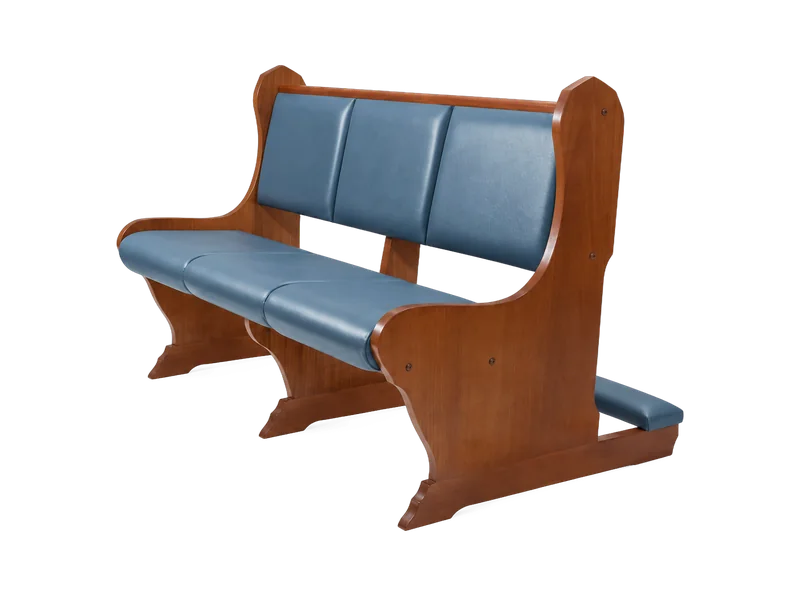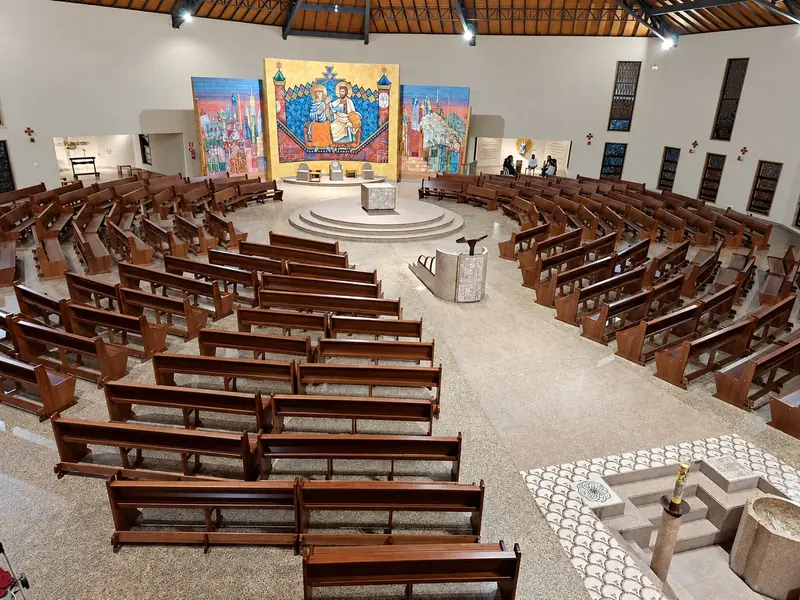
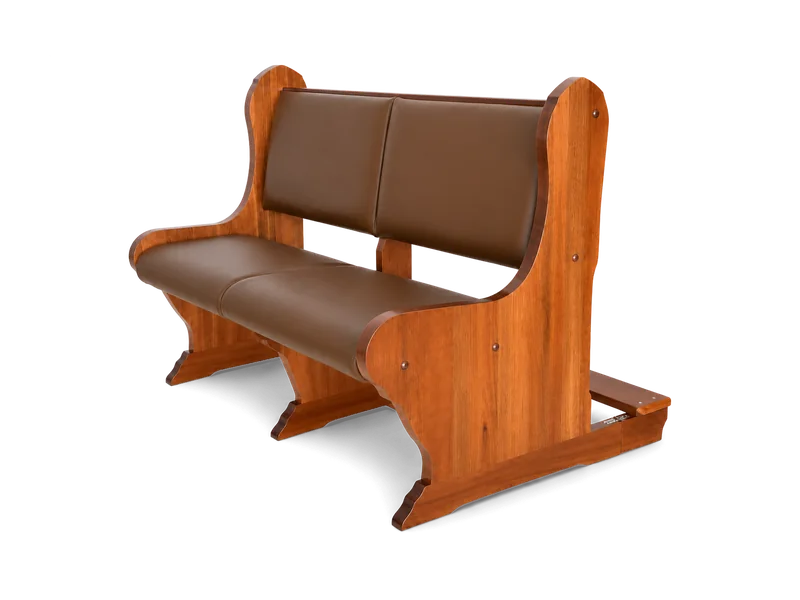
To clean upholstered church pews without damaging the fabric, start with the basics: vacuum frequently and wipe with a slightly damp cloth and mild soap, always testing first in a hidden spot. Faux leather handles damp wiping more readily than fabric. For stubborn stains or thorough cleaning, the safest approach is to hire a company specializing in upholstery cleaning.
Móveis Zanovello manufactures upholstered church pews at its own factory in Floreal/SP, with fabric or faux leather upholstery. The guidelines below cover general care. The most important rule: follow the instructions from the manufacturer of the fabric or faux leather used on your pews.
Weekly routine: vacuuming and wiping
Church upholstery seats many people several times a week. Dust, hair, crumbs from children's snacks, and dirt from shoes collect in the seams of the seat and backrest. A simple routine keeps dirt from working its way into the fabric:
- Vacuum the seat, backrest, and seams with a soft brush attachment at least once a week.
- Wipe with a soft, slightly damp cloth, thoroughly wrung out, following the weave of the fabric.
- Clean the wood on the ends and armrests with a separate cloth, keeping water from running onto the upholstery.
- Let it dry completely before the next service, with the worship hall well ventilated.
On models with upholstered kneelers, such as the Z-Especial and Z-Florença, vacuum the kneeler too, since it sits close to the floor and collects more dust.
Fabric and faux leather need different care
Zanovello upholstered church pews come in fabric or faux leather, in beige, gray, burgundy, blue, brown, and other colors agreed on in the proposal. Each upholstery material responds differently to cleaning.
Fabric
- Absorbs liquid faster, so stains need prompt attention.
- Requires a barely damp cloth, never a soaking wet one. Excess water passes through the fabric and wets the foam underneath.
- Scrubbing hard frays the weave and leaves the area lighter than the rest.
Faux leather
- The less porous surface is easier to wipe with a damp cloth.
- Well-diluted mild soap removes most hand and sweat marks.
- Avoid products containing solvents, which dry out and stain the finish.
For either material, test any new product on a hidden spot first. The underside of the seat or the back of the backrest works well.
Common stains: juice, coffee, ink, and chewing gum
The first rule for any stain is to act quickly and avoid rubbing. Rubbing spreads the dirt and pushes liquid into the foam.
- Juice, coffee, and soda: blot up the excess with paper towels, pressing without rubbing. Then wipe with a slightly damp cloth and mild soap, working from the outside of the stain inward, and dry with a clean cloth.
- Pen and marker: each ink reacts differently, and many removers damage fabric. Try a damp cloth with mild soap; if the stain remains, call a professional upholstery cleaner.
- Chewing gum: harden it with a small bag of ice placed on top, then remove it gradually without pulling the weave.
- Mud and dirt: let dry, then vacuum. Only then treat any residue with a damp cloth.
Professional cleaning: when it makes sense
Even with regular care, upholstery collects dirt a cloth cannot reach. Professional deep cleaning is worthwhile when:
- the fabric has lost color in heavily used areas;
- old stains have returned after routine cleaning;
- the worship hall will host an important event, such as a dedication, a wedding, or a visit from convention representatives;
- a musty smell remains after a water leak.
When hiring a cleaner, tell them whether the pew has fabric or faux leather upholstery and show them the specification included in the factory's proposal. The cleaner chooses the method based on the material. Ask them to protect the wooden pew ends during cleaning to keep cleaning products off the wood.
Schedule cleaning for a day without services, allowing plenty of time before the next gathering. The upholstery must be dry before anyone sits on it, and a well-ventilated worship hall helps it dry.
How to extend upholstery life
A few simple habits make a difference over the years:
- Protect pews from constant direct sunlight with curtains or window film. Strong sunlight fades upholstery.
- Keep sharp objects, keys, and buckles off the seats.
- Give parents and Sunday school teachers guidance about snacks and pens near the pews.
- Fix roof leaks and water intrusion promptly. Wet foam takes a long time to dry.
- When moving pews for an event, lift them by the wood rather than dragging them by the upholstery.
Choosing upholstery with cleaning in mind
If your church has yet to purchase pews, consider the cleaning routine when choosing. Here are a few questions for the building committee:
- Does the church have a weekly cleaning crew, or does care depend on volunteers?
- Are there many children and frequent events with food in the worship hall?
- Does the worship hall receive direct sunlight during part of the day?
Churches with heavy use and limited staff often prefer faux leather. Churches that want the texture of fabric can choose a color that better hides wear, such as gray or brown. See the full comparison in fabric or faux leather for upholstered church pews.
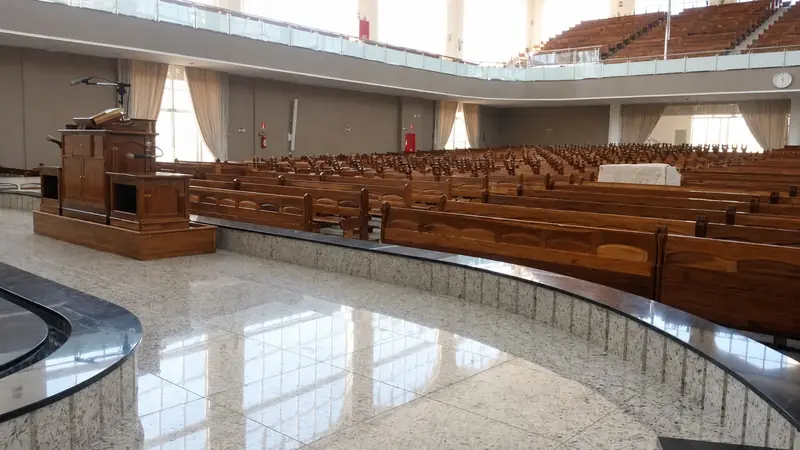
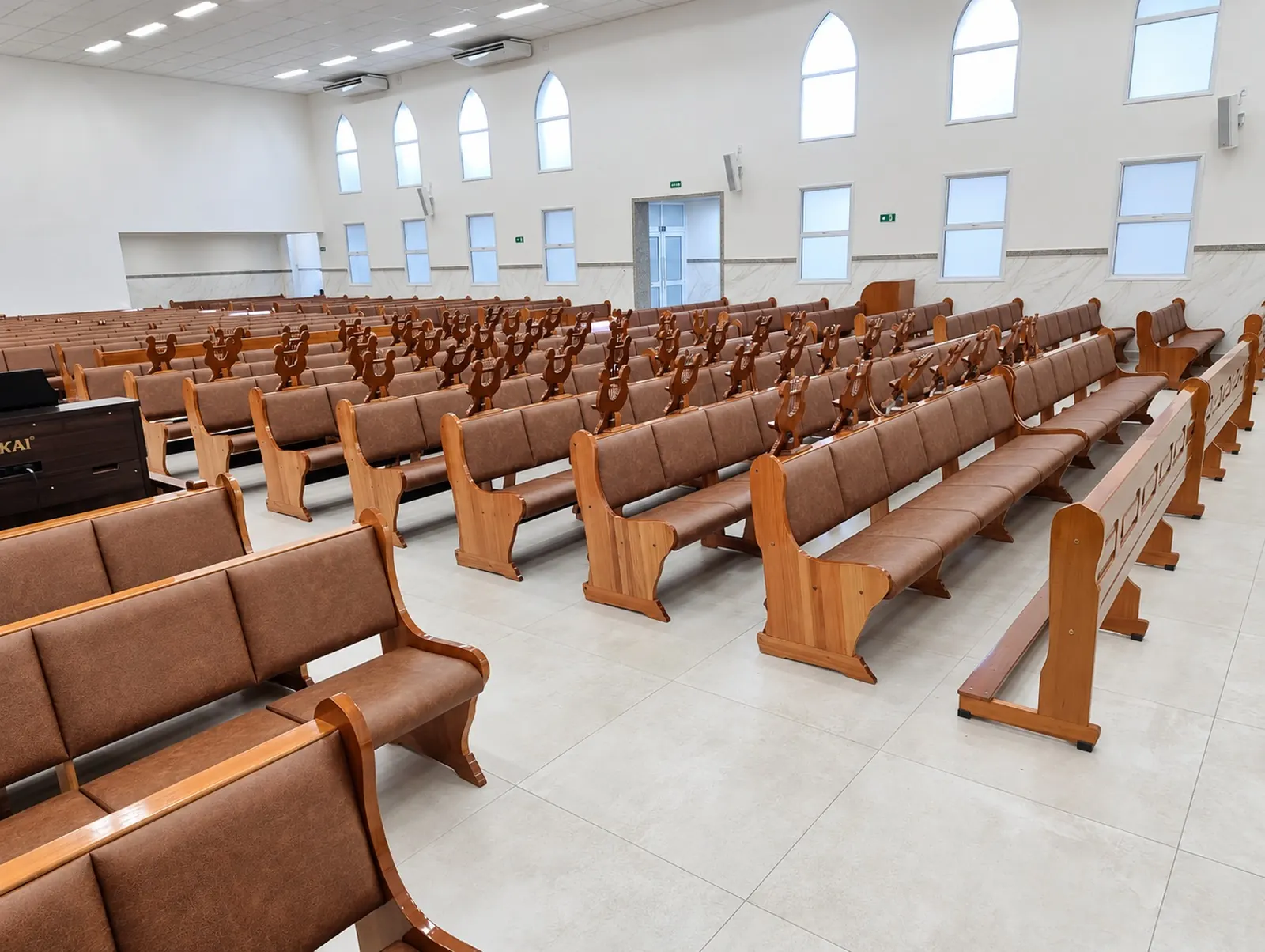
Among Zanovello models, the Z-Comfort has individual seat and backrest cushions, while the Z-Barcelona has channeled upholstery and a wooden kneeler that wipes clean with a cloth. The CCB Vila Moraes house of prayer in São Paulo/SP received Z-Barcelona pews with brown upholstery and Lyptus ends. See all models under upholstered church pews.
Next step
To compare models and upholstery materials, build your quote on the website or contact our team on WhatsApp. The Móveis Zanovello proposal includes the model, fabric or faux leather, color, length of each pew, timeframe, and 7-year written warranty. The minimum order is 20 pews.