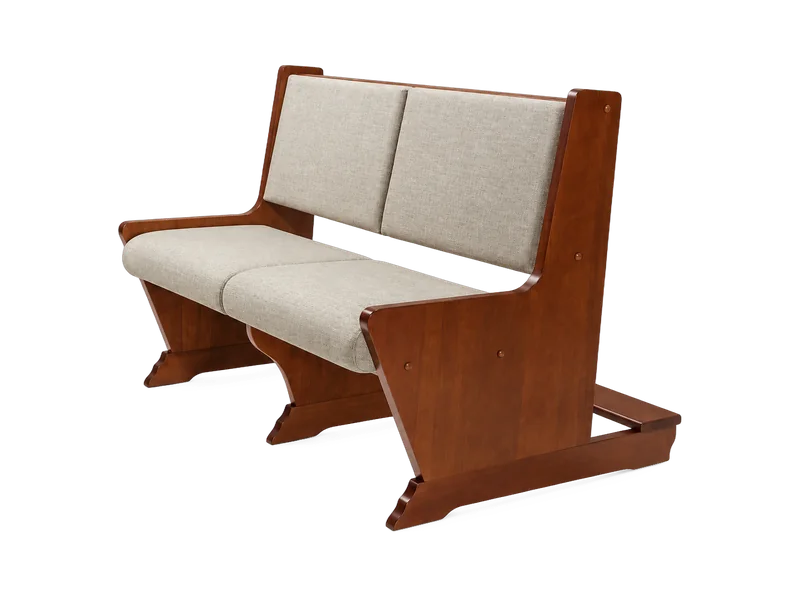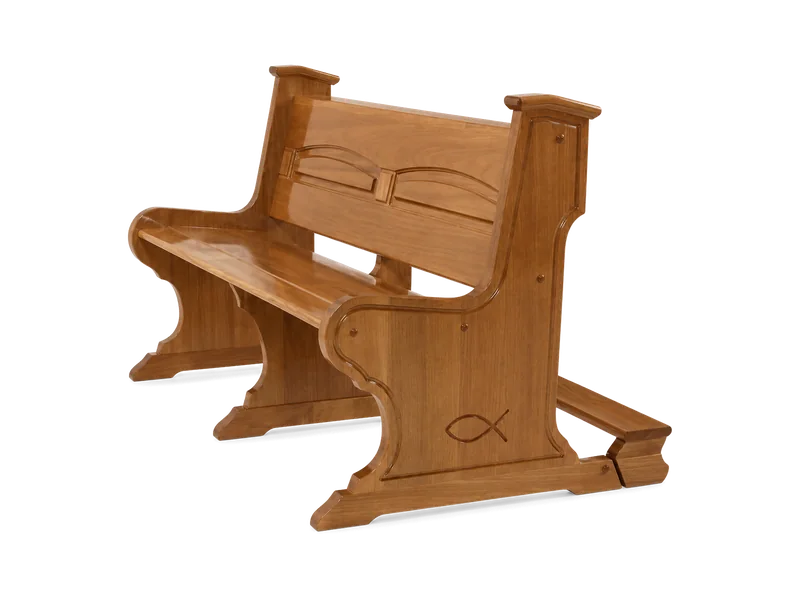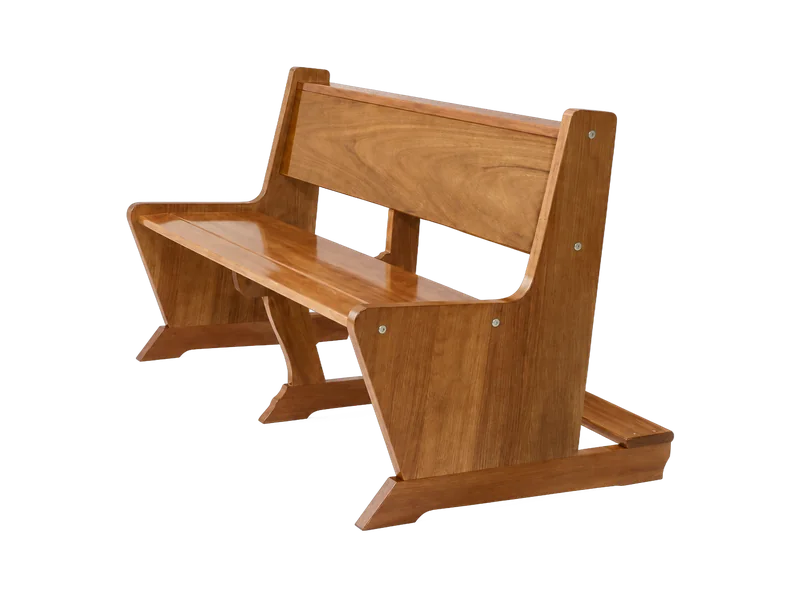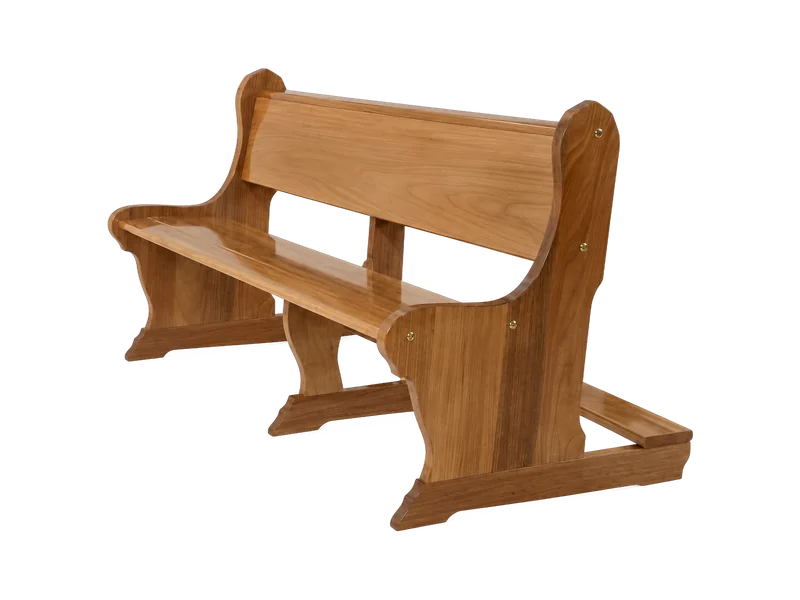
Church pew varnish protects wood against moisture, stains, and wear, and determines the pew's final tone and sheen, which can be matte, satin, or gloss. At Móveis Zanovello, finishing is done at our factory in Floreal/SP, and each model has its own finish: the Z-Comfort, for example, features a satin polyurethane finish with a slightly aged effect.
For the building committee, varnish is often the last choice and one of the most visible. It will coordinate with the floor, altar, and upholstery for many years. This article explains what varnish does, how to choose the sheen and tone, and how to care for it so it lasts.
What a pew's finish does
Unfinished wood absorbs water, sweat, and oils from hands, and stains easily. Varnish forms a film over the wood that serves three functions:
- Protection: helps keep moisture and dirt from penetrating the wood.
- Cleaning: seals the surface so the pew can be cleaned with a slightly damp cloth.
- Appearance: enhances the wood grain and determines the overall color and sheen.
On a church pew, the areas that see the most use are the seat, the top edge of the backrest where people place their hands to stand up, and the armrest. These are the first areas to show whether the finish has been well maintained.
Matte, satin, or gloss
The sheen level makes a substantial difference in the sanctuary. Wood varnish manufacturers' technical data sheets describe gloss, satin, and matte versions, with the difference being how much light the surface reflects.
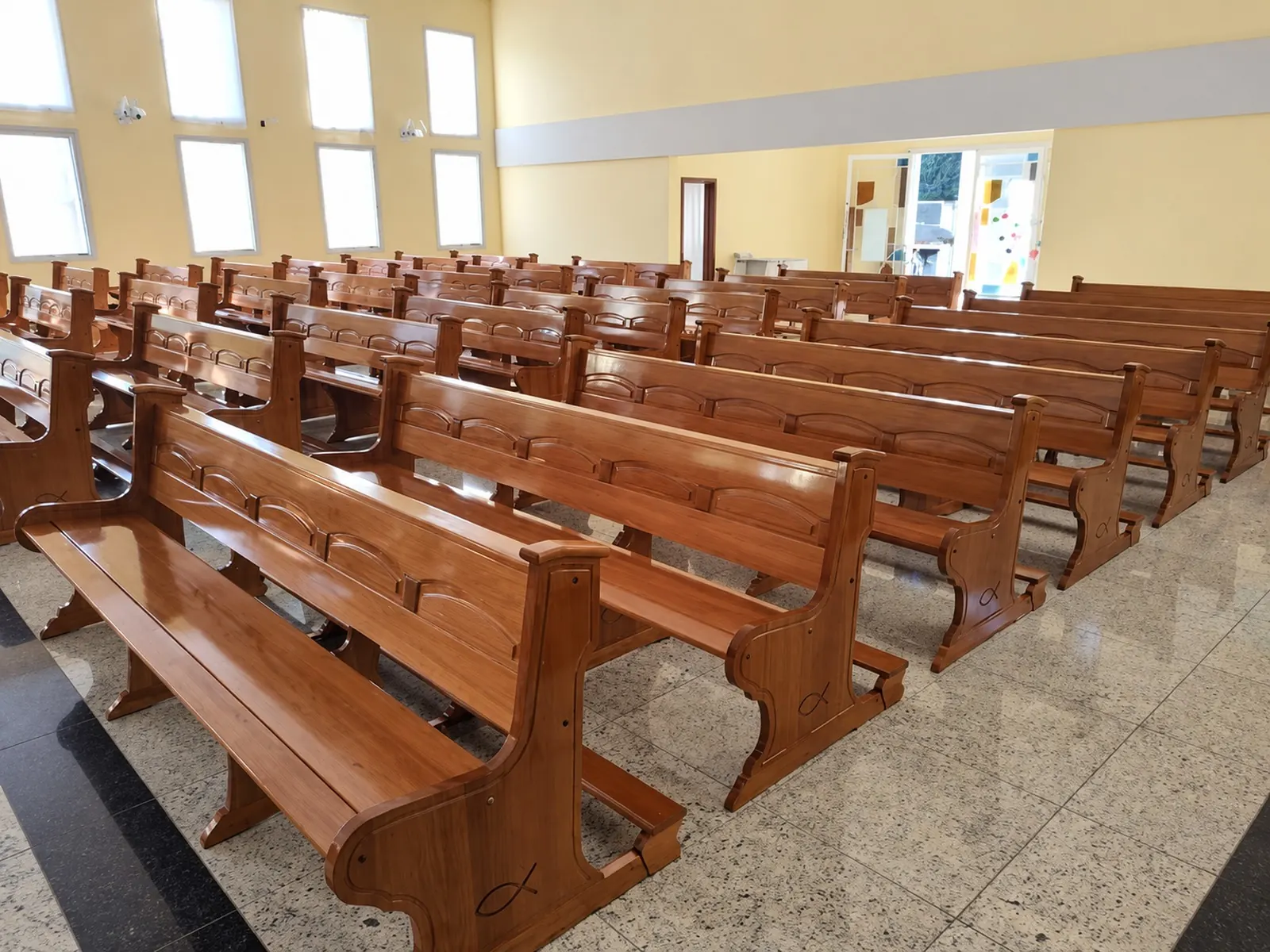
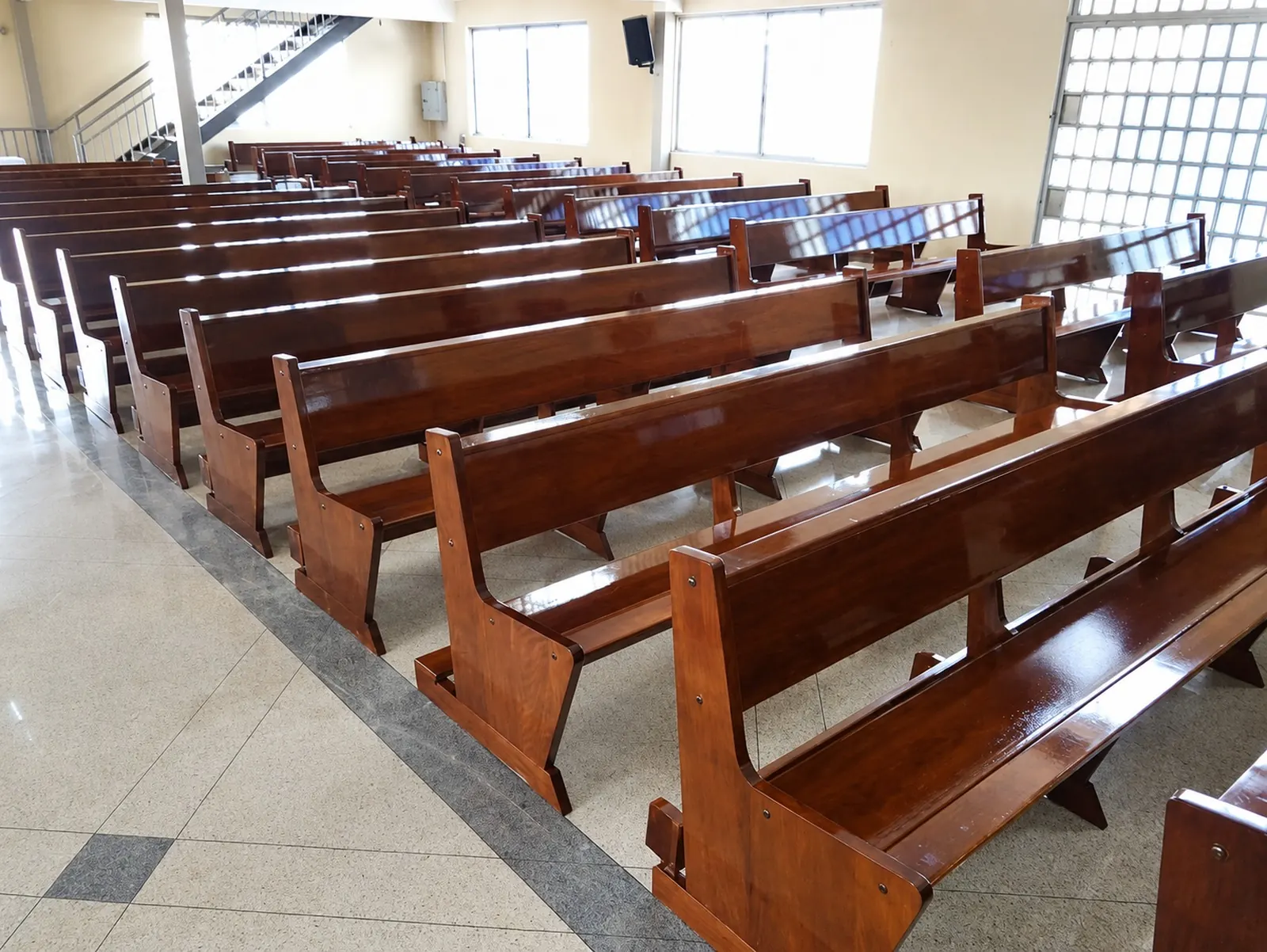
- Gloss: reflects more light and highlights the wood grain. Zanovello's Z-03, Z-04 and Z-04 Especial wooden church pews are available with a gloss finish.
- Satin: offers a middle ground, with a soft sheen. It reflects less light from fixtures and shows fewer fingerprints. This is the finish used on the Z-Comfort.
- Matte: reflects almost no light. Creates a more rustic, contemporary look.
No single sheen is right for every church. Worship halls with plenty of natural light and glossy floors often look balanced with a satin finish. Traditional sanctuaries with extensive carving gain presence with gloss varnish.
Polyurethane and other finishes
PU varnish is polyurethane-based. Manufacturers' technical data sheets describe polyurethane varnish for protecting and decorating wood, including floors and parquet that receive foot traffic throughout the day, in gloss, satin, and matte versions. Both solvent-based and water-based versions are available.
At Zanovello, the Z-Comfort comes with a satin polyurethane finish with a slightly aged effect: the edges are a little darker than the center, giving the wood depth. For other models, the color and finish are agreed on in the proposal before manufacturing.
All Zanovello pews are made from Lyptus, a renewable eucalyptus hardwood grown in managed plantations. The Lyptus grain remains visible after finishing. Learn more in is Lyptus wood good for church pews.
How the finish color changes the sanctuary
The same wood can have a light, honey-colored, or dark appearance, depending on the finish color. Some completed Zanovello projects clearly show this difference:
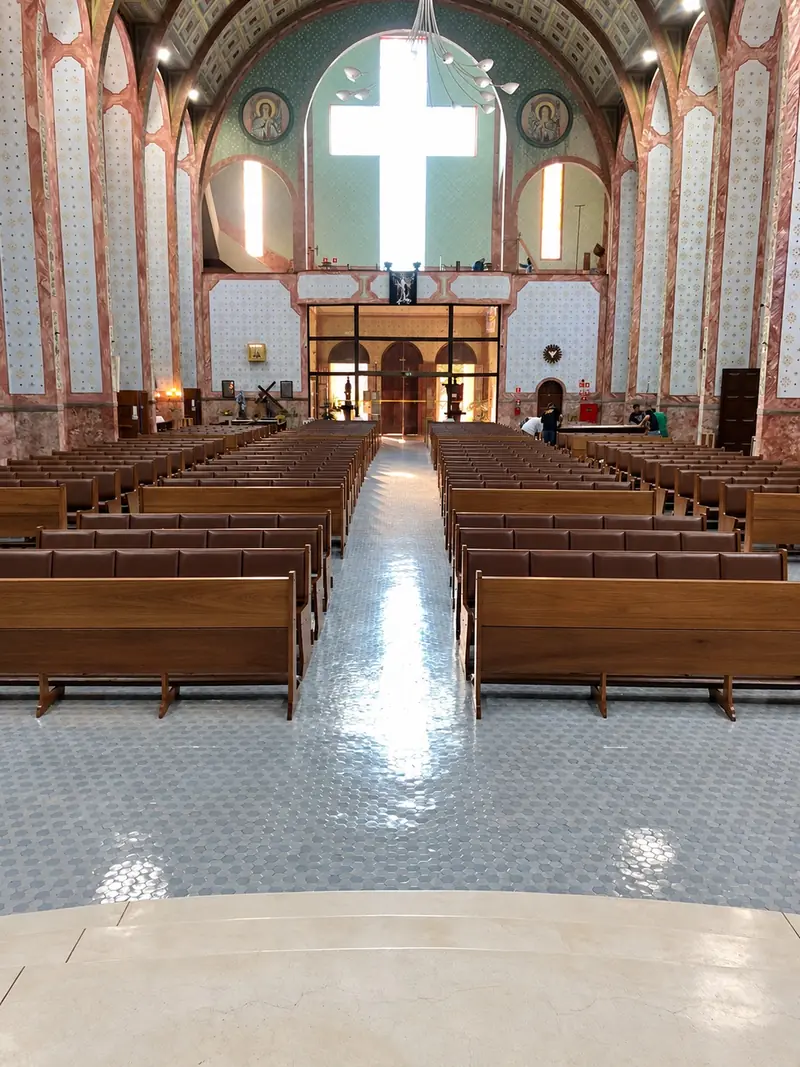
- Honey tone: Paróquia Nossa Senhora do Carmo, in Uberlândia/MG, received Z-04 pews in honey-colored Lyptus with visible grain. The CCB house of worship in Agudos/SP has Z-03 pews in a honey tone with a gloss finish.
- Reddish honey: Paróquia São José, in Americana/SP, received Z-01 pews with a high-gloss, reddish-honey finish.
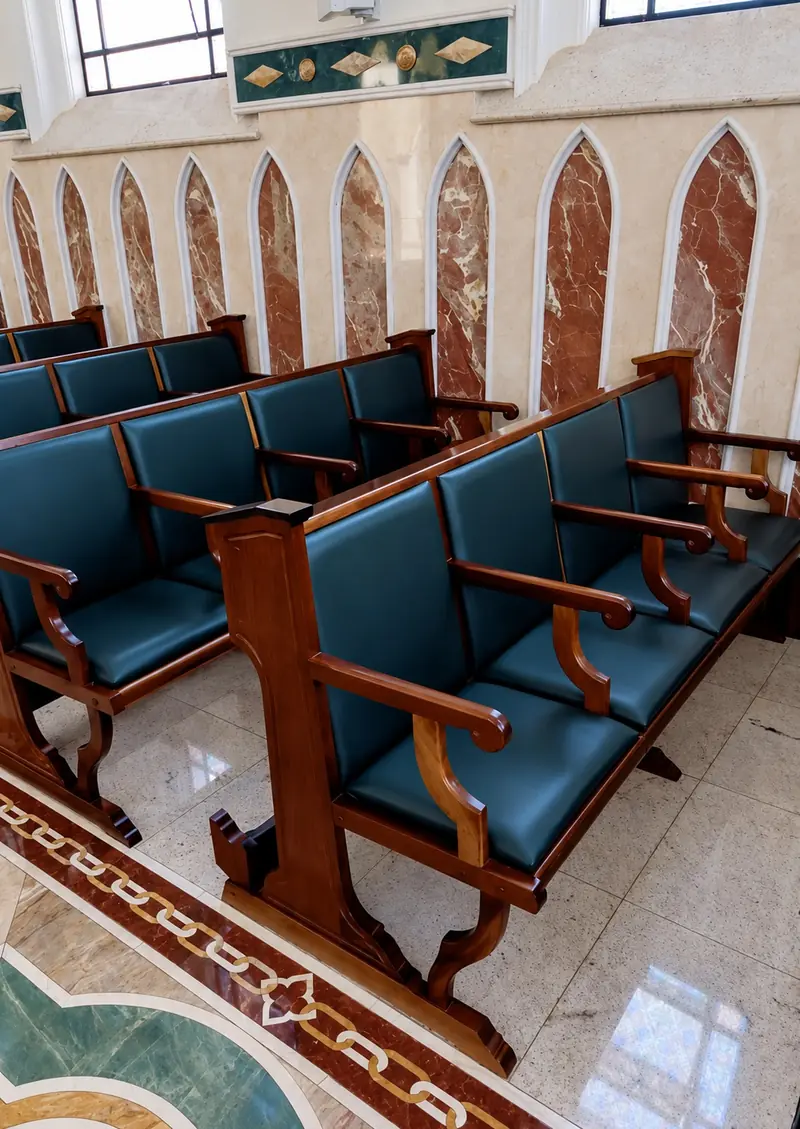
- Dark: Paróquia Nossa Senhora da Medalha Milagrosa, in Brasília/DF, received Z-04 pews with a dark, reddish finish. Mosteiro Arautos do Evangelho, in Maringá/PR, has deep teal upholstered pews with dark wood frames.
Three practical guidelines for choosing a color:
- Contrast with the floor. Light flooring highlights darker wood, defining each row. Dark flooring calls for lighter wood.
- One finish throughout the chancel. An altar, ambo, pulpit, and pews with the same finish give the sanctuary a cohesive look.
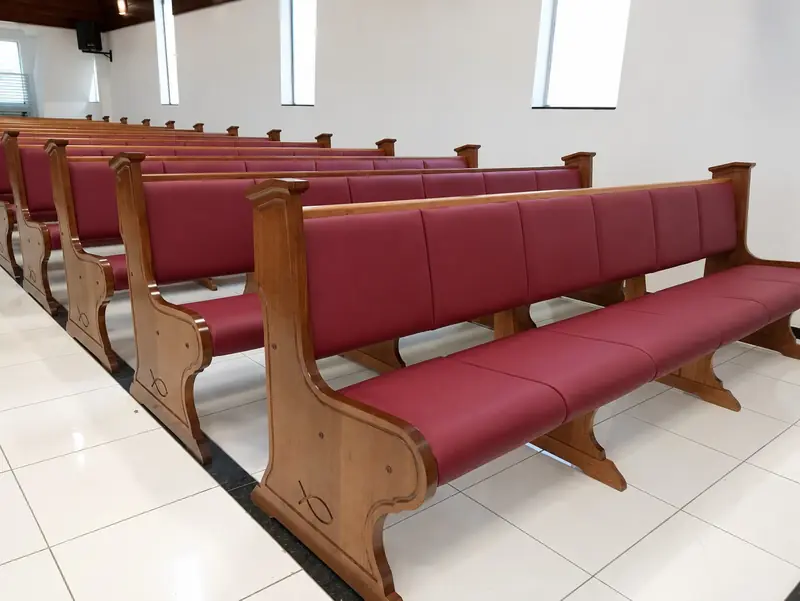
- Coordinate with the upholstery. For upholstered pews, the wood finish and fabric color are chosen together.
Read more in church pew colors.
Care tips for a lasting finish
The finish lasts longer when cleaning protects its coating. General care guidelines:
- clean with a soft, slightly damp cloth and dry immediately afterward;
- use only well-diluted mild soap when needed to remove dirt;
- avoid alcohol, solvents, abrasive cleaners, and steel wool;
- protect pews from constant direct sunlight and leaks;
- do not drag metal objects across the seat.
Find the complete step-by-step guide in how to clean wooden church pews.
When the finish needs a touch-up
Over the years, the finish may show wear in heavily used areas, scratches through the coating, or spots that have lost their sheen. Before any touch-up, assess what happened, because the wrong product applied over the original finish can cause staining or peeling.
If your pews are from Zanovello, send our team photos via WhatsApp, including each pew's position in the row, and we will advise you on what to do. Our factory's pews come with a 7-year written warranty.
Next step
When purchasing new pews, the finish color and sheen are specified in the proposal, along with the model and length of each pew. Explore our wooden church pews and upholstered church pews. Build your quote on the website or contact our team on WhatsApp. Your written proposal from Móveis Zanovello includes a timeline and a 7-year warranty. The minimum order is 20 pews.