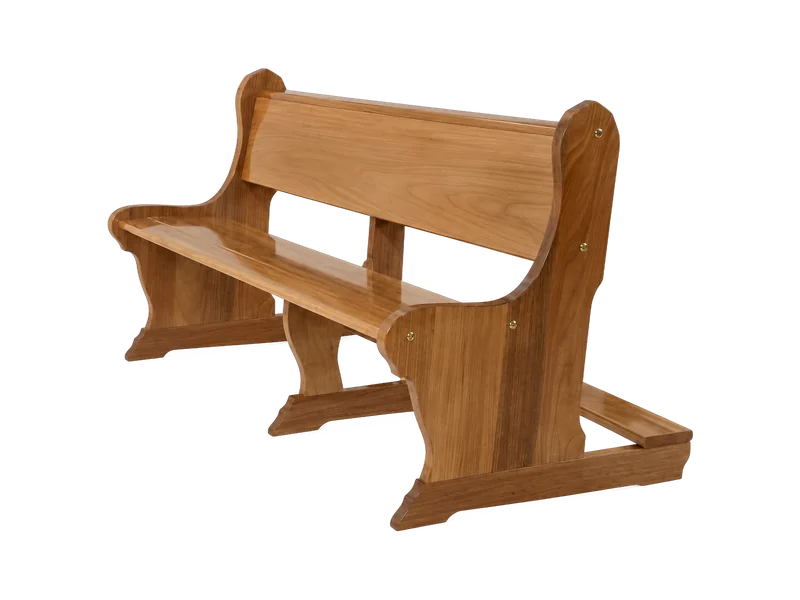
To clean wooden church pews, remember the main rule: use a soft, slightly damp cloth, followed immediately by a dry cloth. Avoid abrasives, solvents, and excess water, which damage the finish. Proper care also means keeping pews away from constant direct sunlight and leaks, and checking screws and fasteners from time to time.
This guide was written for caretakers, deacons, and cleaning teams by Móveis Zanovello, which has manufactured wooden church pews in Floreal/SP since 1965. These are general care guidelines for finished wood furniture, applicable to the factory's models and most wooden pews.
Weekly cleaning routine
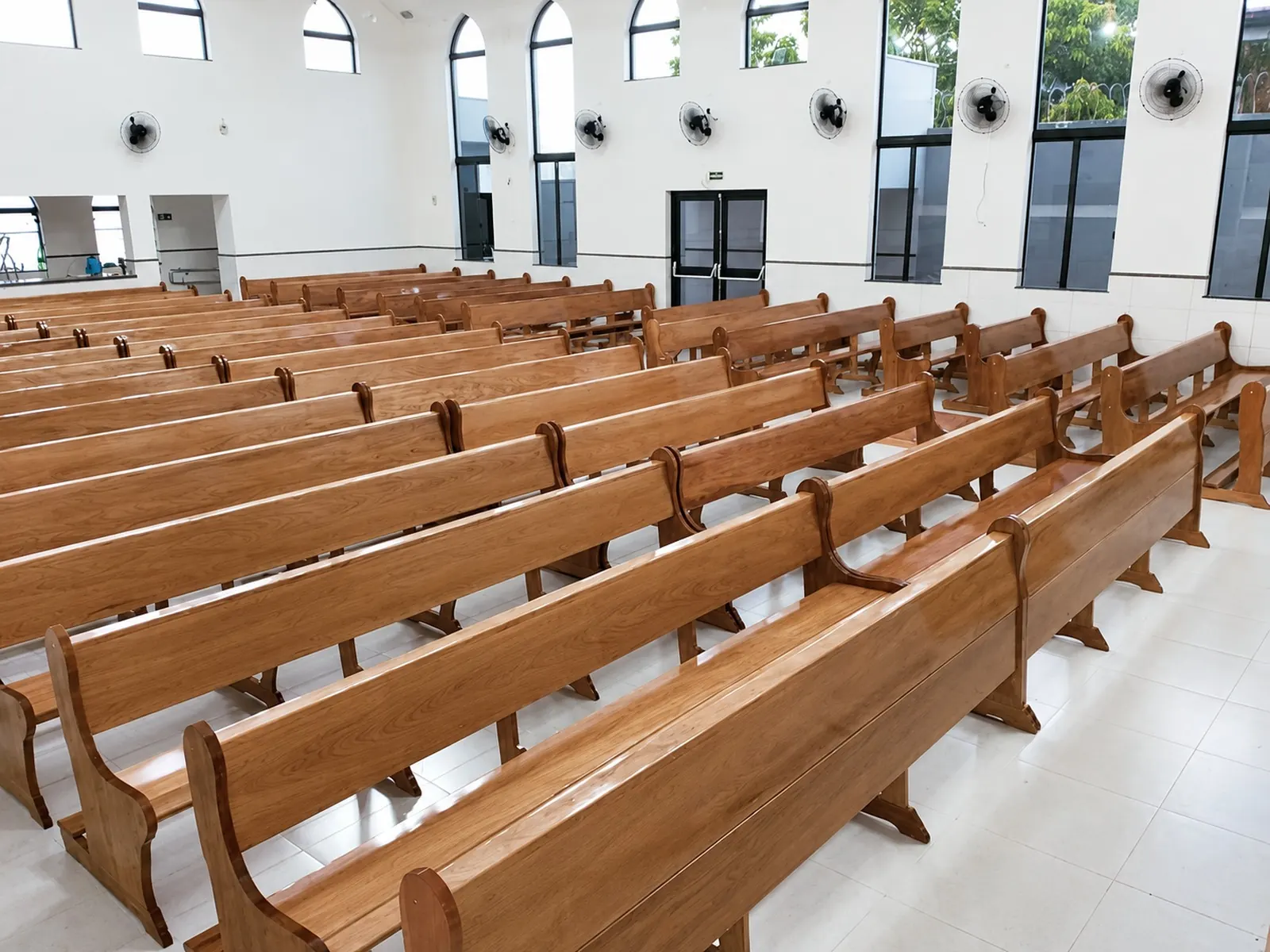
Wooden pews do not get very dirty, but dust collects in corners, on seats, and in Bible racks. A simple routine after the last service of the week takes care of it:
- Remove dust with a soft, dry cloth or duster, starting with the backrest and finishing with the seat.
- Wipe with a soft, slightly damp cloth, wrung out well, on the seat, backrest, and armrest. Use only water, or water with a few drops of mild soap for handprints or sweat marks.
- Dry immediately with another clean cloth. Water left on the finish leaves marks.
- Clean the Bible rack and kneeler, where paper, dust, and dirt from shoes collect.
- Sweep or vacuum the floor beneath the pews before damp-mopping, and avoid leaving standing water against the pew legs.
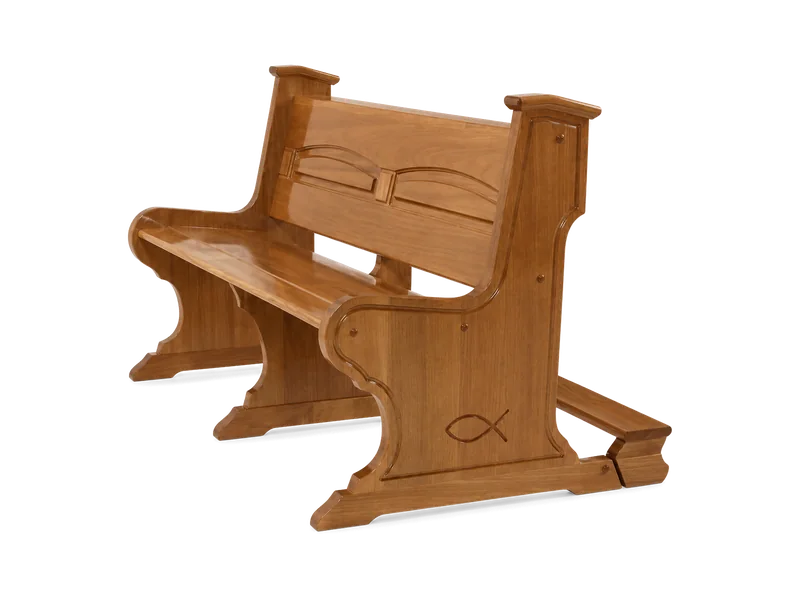
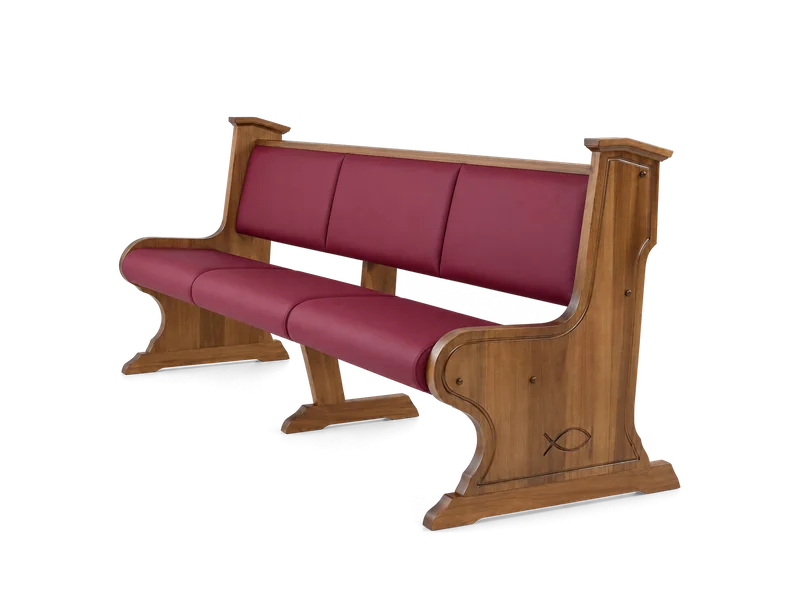
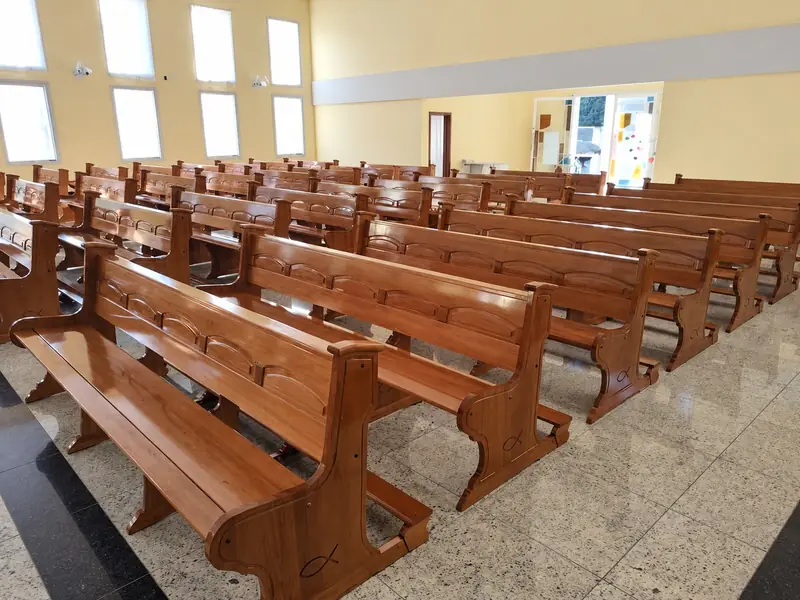
On carved pews such as the Z-01, which features a carved fish and capitals on the ends, a soft brush removes dust from grooves without scratching. On smooth-back models such as the Z-03, a cloth reaches everything.
Products you can and cannot use
The finish is the layer that protects the wood. Anything that damages it leaves the pew exposed. When in doubt, using less product is safer.
Safe to use:
- clean water;
- well-diluted mild soap;
- a soft, clean microfiber or cotton cloth;
- a soft-bristled brush for carvings.
Avoid:
- alcohol, paint thinner, acetone, kerosene, and any solvents;
- bleach, chlorine cleaners, and strong degreasers;
- steel wool, abrasive sponge pads, and scouring powder;
- abrasive all-purpose cleaners;
- pouring a bucket of water directly onto the pew.
If the church wants to use a specific furniture care product, follow the product manufacturer's instructions and test it first in a hidden spot, such as the underside of the seat.
Sunlight, humidity, and air conditioning
Wood responds to its environment. Three situations need the caretaker's attention:
- Direct sunlight every day on the same pew, through a window or open door, tends to change the color of the wood and finish over time. Curtains, window film, or blinds help.
- Leaks and water intrusion are a pew's worst enemies. If rainwater drips onto a pew, dry it as soon as possible and address the source in the roof or wall.
- Washing floors with too much water leaves pew legs wet for hours. Use a well-wrung mop near the rows.
With air conditioning, watch for water dripping from the unit or piping. Check that nothing is dripping onto any row.
Scratches, stains, and signs of wear
Signs of wear are normal on a pew used by the congregation several times a week. Here are some common issues and what to do:
- Cup rings or water marks: dry thoroughly and let the pew air out. Light marks often disappear in dry weather.
- Candle wax: let the wax harden, then carefully remove it with a plastic scraper or card, without scraping with metal. Remove the residue with a slightly damp cloth.
- Chewing gum: harden it with a small bag of ice and remove it without forcing it.
- Pen ink or adhesive: avoid solvents. Try a slightly damp cloth with mild soap. If it does not come off, contact the factory team before using another product.
- Scratches in the finish: scratches that go through the finish into the wood need evaluation. Do not sand them yourself.
A simple precaution helps a lot: ask congregation members not to place metal objects, keys, or bags with buckles directly on the seat.
Fasteners and screws: periodic inspection
Church pews get a workout. People sit, stand, kneel on the kneeler, and rest their hands on the backrest of the row ahead. That makes pews worth including in regular building inspections.
What the caretaker can check:
- Sit on each pew and check whether it wobbles or creaks.
- Check that the screw caps are in place on the ends.
- Make sure the kneeler and Bible rack are secure.
- Inspect the foot pads and legs, especially near doors and areas that get wet.
- After moving pews for an event, check alignment and fasteners again.
Document anything you find with a photo and the pew's position in the row. This makes it easier to discuss the issue with the manufacturer.
When to contact the manufacturer
Contact the factory for structural or finish problems: a pew that still wobbles after inspection, a loose part, a crack in the wood, peeling finish, or a stain that will not come off with the care described above.
Móveis Zanovello pews come with a 7-year written warranty. If you have questions about a pew, send photos to our team through WhatsApp for guidance. The pews are made from Lyptus® (eucalyptus hardwood) from planted forests at our own factory in Floreal/SP. To learn more about the wood and finish, read is Lyptus wood good for church pews? and church pew finishes.
Next step
If your church's pews are beyond routine care and the building committee is considering replacement, explore Zanovello's wooden church pews and build your quote with the worship hall measurements. Your quote comes in writing, with lead time and a 7-year warranty. The minimum order is 20 pews.