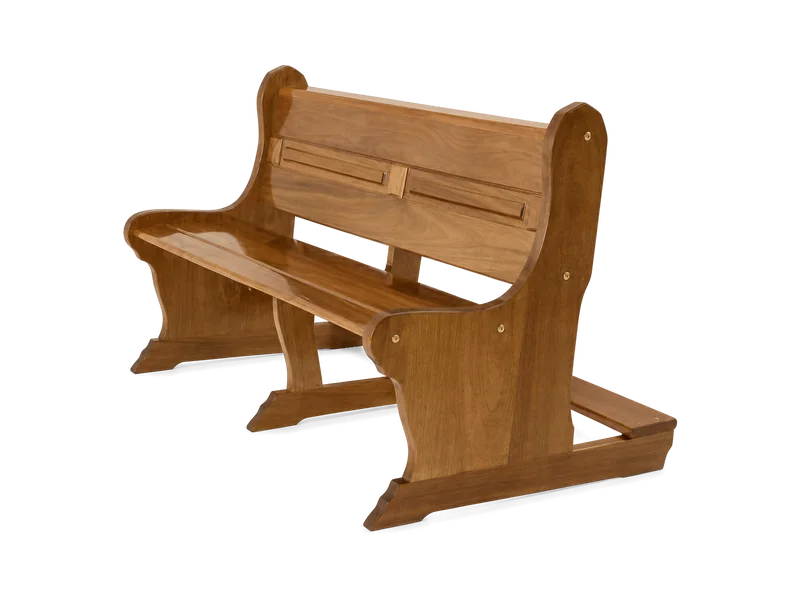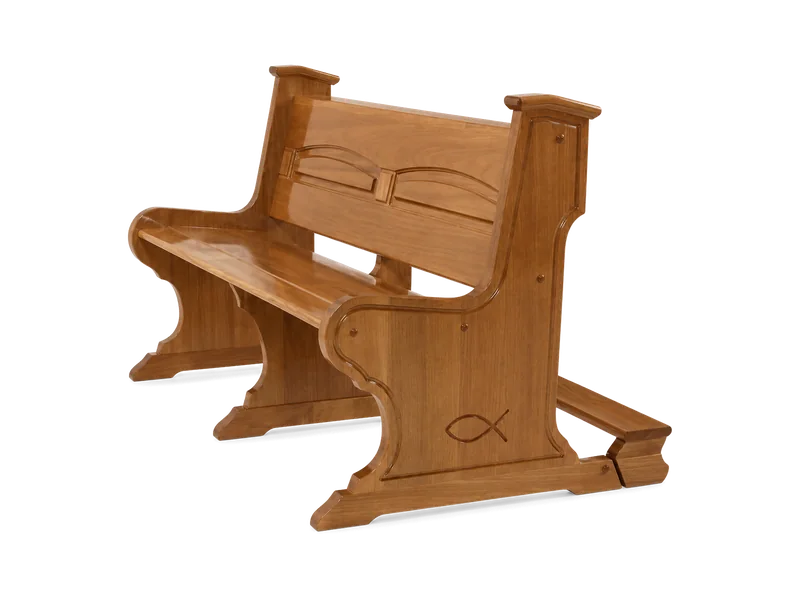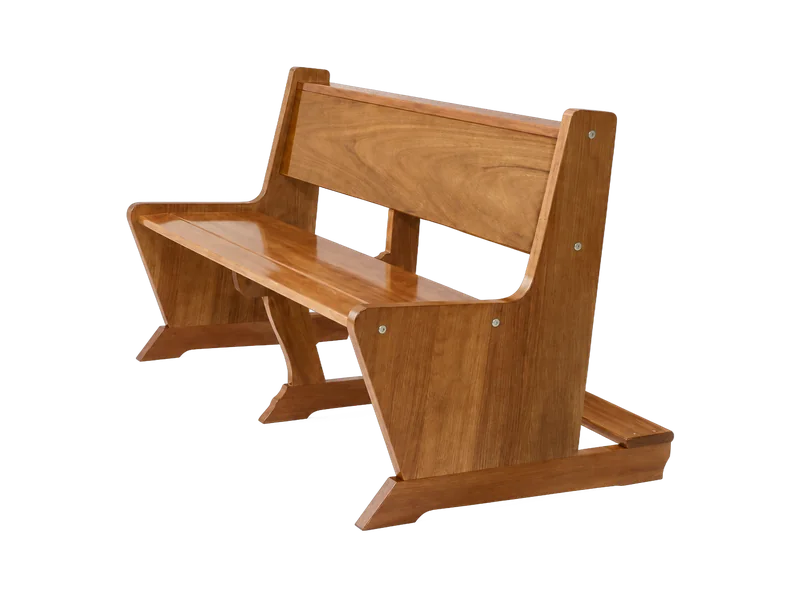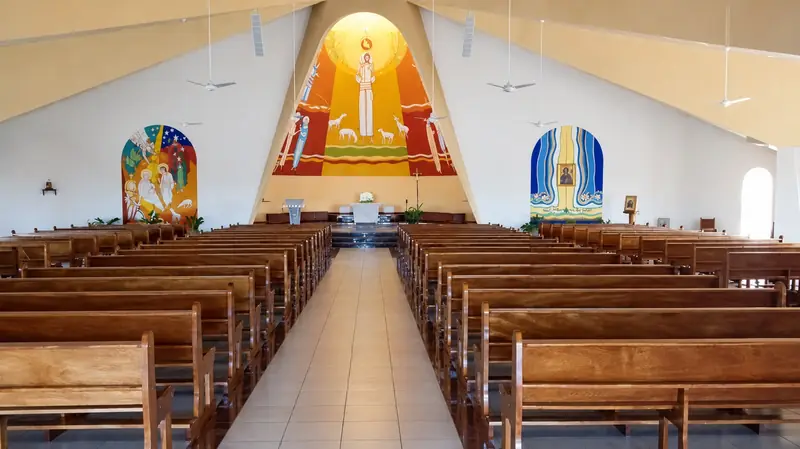
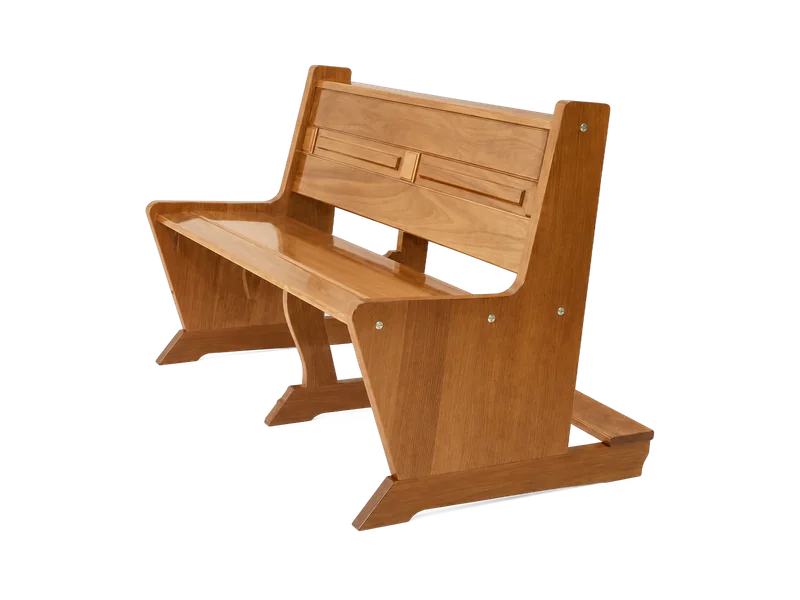
Lyptus wood is a good choice for church pews: it is plantation-grown eucalyptus hardwood, cultivated for furniture and woodworking, with attractive grain and the sturdiness needed for regular worship services. That is why it is the only wood Móveis Zanovello uses for the pews it manufactures in Floreal/SP, where it has made church furniture since 1965.
Below are the questions building committees commonly ask about Lyptus before placing an order, along with answers the factory can confidently provide.
What Lyptus wood is
Lyptus is the trade name for plantation-grown eucalyptus wood. The trees grow in planted forests, are harvested, and the land is replanted. At the factory, boards are cut, machined, sanded, and varnished to become pew ends, seats, backrests, Bible racks, and kneelers.
At Móveis Zanovello, the name is spelled with a Y: Lyptus. It is the wood used throughout the factory's current product line, including wooden church pews, upholstered pew frames, pulpits, ambos, altar tables, and armchairs.
What you can see in a finished pew:
- Distinctive grain, which becomes even more visible after varnishing;
- Smooth surfaces after sanding, on the seat, backrest, and ends;
- Final color determined by the finish, from honey to dark tones, as agreed in the proposal.
Is Lyptus eucalyptus?
Yes. Lyptus is eucalyptus wood. The word "eucalyptus" covers many species and uses, from posts and firewood to paper and pulp. Lyptus is eucalyptus wood grown for furniture and woodworking.
People who grew up seeing eucalyptus used only for farm fences sometimes find the name surprising. Take a look at a finished pew: the 3D views of the Z-04 Especial pew and Z-03 Especial pew show the grain, raised backrest panels, and sheen of the finish.
Strength and durability in church pews
Church pews work hard. People sit and stand several times during each service, children climb onto the seats, bags rest against the backrests, and cleaning happens every week. Models with kneelers also support the weight of people kneeling. Durability depends on the wood as well as how the pew is built and assembled.
What makes a church pew last:
- Well-crafted wood components, straight and properly finished before assembly.
- Secure joints and fasteners connecting the ends, seat, backrest, and crosspieces.
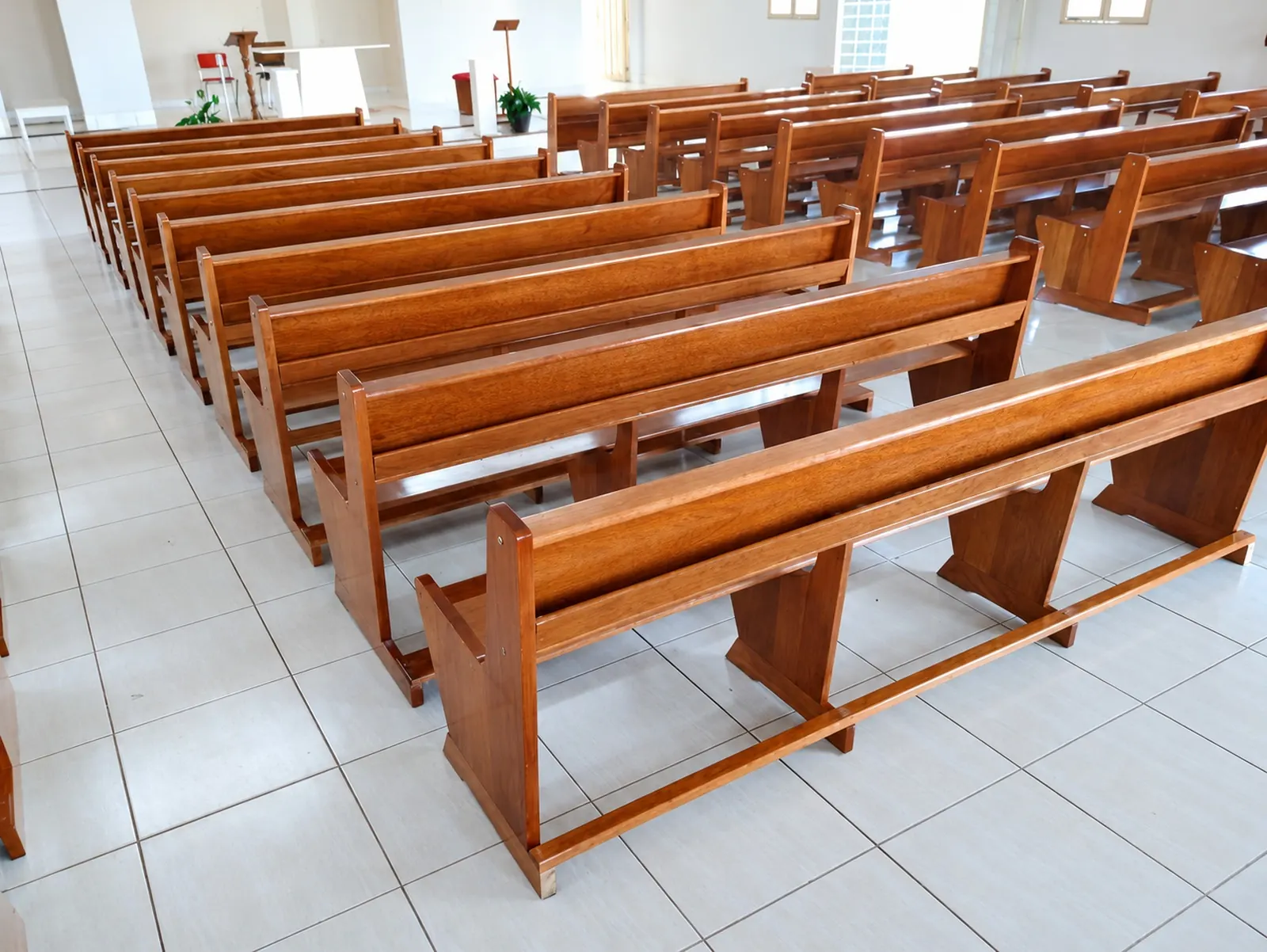
- Well-distributed floor supports. The Z-Elegance, for example, has two ends and a center leg with a foot pad.
- Finish on every exposed surface that comes into contact with hands.
- Level installation in the worship hall, handled by the factory's own team in Brazil. Pews shipped abroad arrive unassembled, without installation.
This article does not provide Lyptus density, hardness, or mechanical strength figures because Zanovello publishes technical data only with a source. If the building committee's engineer needs these values, request the wood supplier's technical data sheet or consult publications from research institutions such as Embrapa Florestas and IPT (Institute for Technological Research).
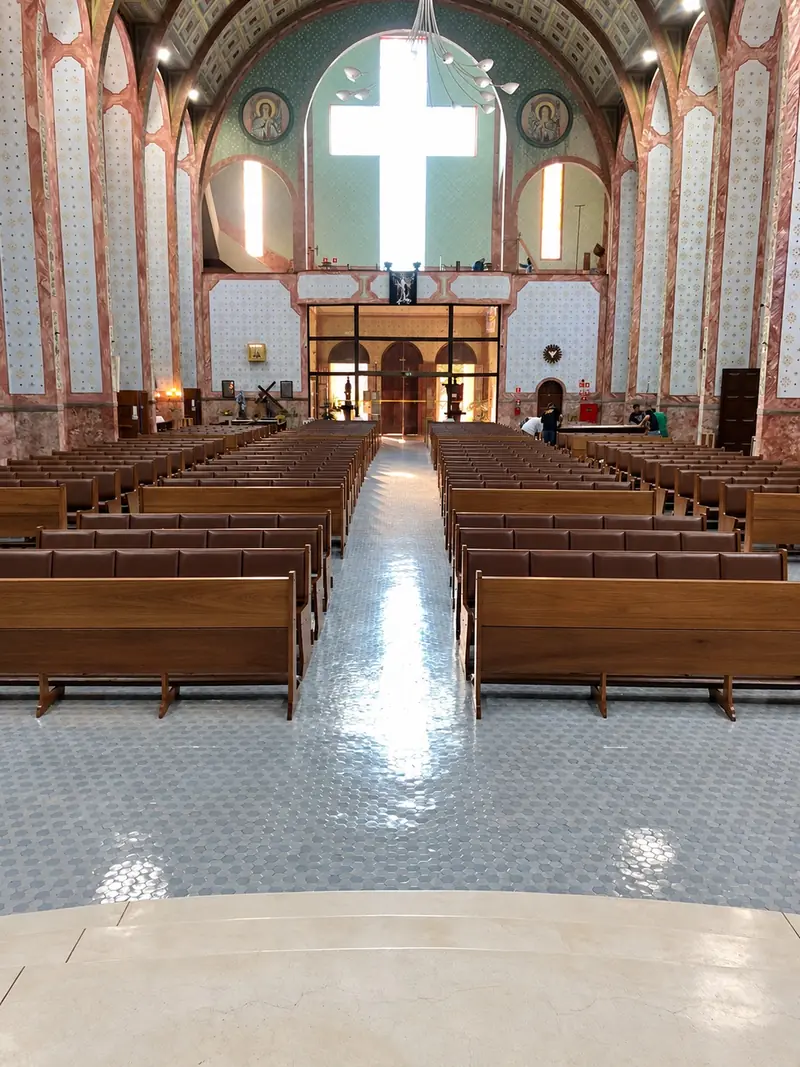
What the factory provides in writing is the pews' 7-year warranty, recorded in the proposal along with the delivery timeline. Completed projects offer evidence too: CCB Campinas/SP received Z-03 Especial pews in the sanctuary and balcony, Paróquia São José, in Americana/SP, received the Z-01 with a carved backrest, and Paróquia Nossa Senhora do Carmo, in Uberlândia/MG, received the Z-04 in honey-colored Lyptus.
Plantation-grown wood: what it means
Plantation-grown wood comes from planted forests. The land is cultivated to produce timber, harvesting follows a cycle, and the area is replanted. It is a renewable source that allows production at scale without depending on logging native forests.
For the church, this has two practical effects:
- Consistency. The factory works with the same wood year-round, helping maintain consistent color and finish on large orders. Factory capacity is approximately 100 pews per month.
- Something to share with the congregation. Many congregations appreciate knowing that their sanctuary furniture came from planted forests. The committee can include this information in the materials it presents to the church.
Finish and wood tone
Lyptus takes varnish well, and the finish determines the pew's final color. The tone is agreed upon in the proposal. Zanovello's completed projects feature a wide range of finishes:
- Honey, on the Z-04 at Paróquia Nossa Senhora do Carmo, in Uberlândia/MG;
- Reddish honey with a high gloss, on the Z-01 at Paróquia São José, in Americana/SP;
- Dark, on the Z-04 at Paróquia Nossa Senhora da Medalha Milagrosa, in Brasília/DF;
- Light, on the Z-03 Especial at CCB Ermelino Matarazzo, in São Paulo/SP.
Satin finishes are also available, such as the lightly antiqued satin polyurethane finish on the Z-Comfort upholstered pew. For help choosing a shade that works with the flooring and walls, see our article on church pew colors. For finish care, read church pew varnish and how to clean wooden church pews.
Why Zanovello works exclusively with Lyptus
Móveis Zanovello works exclusively with Lyptus. The catalog offers no other wood options, by the factory's choice:
- Consistency throughout the sanctuary. Pews, pulpits, ambos, altar tables, and chairs are made from the same wood and can have the same finish color.
- Knowledge of the material. By always working with the same wood, the team understands how it behaves during cutting, engraving a fish symbol or logo on the pew end, and finishing.
- A consistent, renewable source, allowing large orders to be filled without changing materials during production.
The church chooses the model, the length of each pew, the finish color, the upholstery fabric and color for upholstered models, and the symbol or logo engraved on the pew end. Compare models under wooden church pews and learn about the factory's history at about Zanovello.
Next step
With your floor plan or worship hall measurements ready, build your quote on the website or contact our team on WhatsApp. The Móveis Zanovello proposal includes the model, each pew's dimensions, the finish color, the timeline, and a 7-year written warranty. The minimum order is 20 pews.