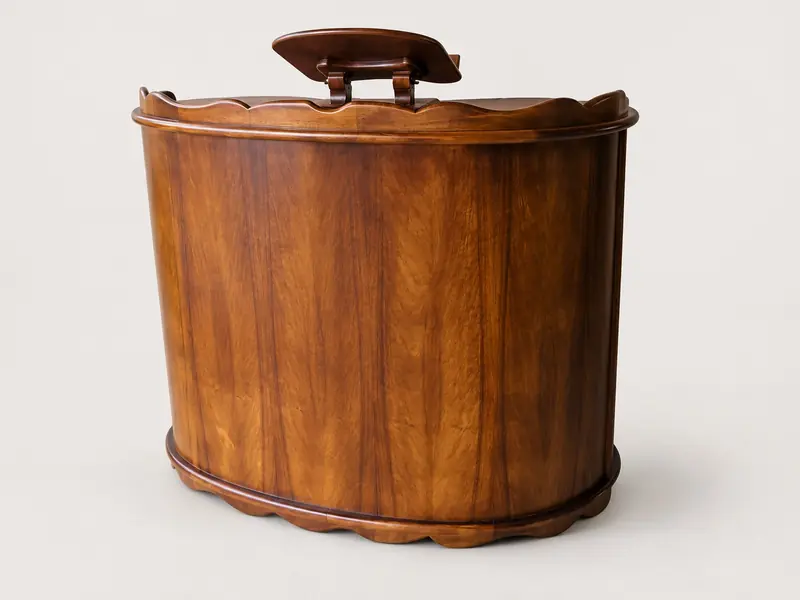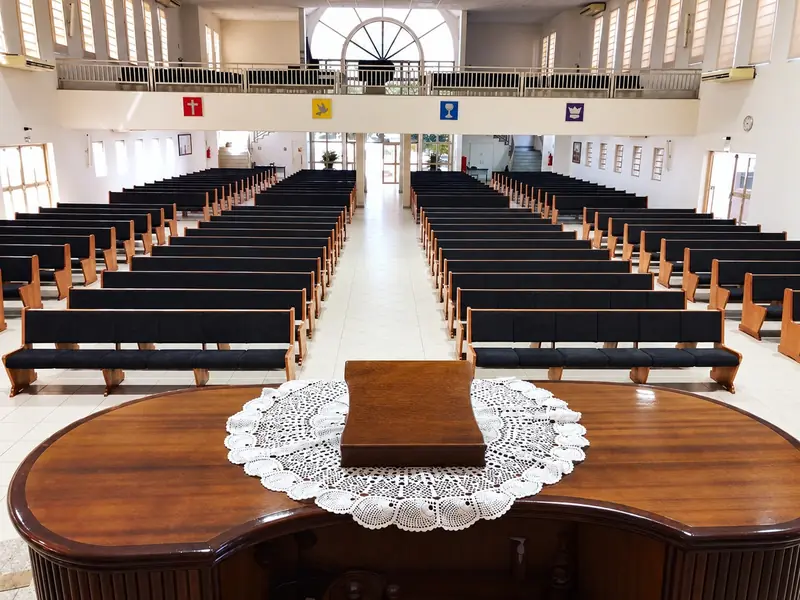
Pulpit and lectern are two names used for the preaching furniture in evangelical churches and the Christian Congregation in Brazil (CCB), while ambo is the Catholic Church's liturgical term for the fixed place from which the Word is proclaimed. Móveis Zanovello manufactures lecterns, church pulpits, pulpit railings, and ambos in Lyptus wood, with the same finish as its pews.
The preaching furniture stands at the center of the altar area and appears in every photo of the sanctuary. It deserves the same care in selection as the pews. Below, learn how the names and styles differ and what the building committee needs to send to request a proposal.
Pulpit, lectern, and ambo: what each one is
The three names overlap in everyday use, but each has its own origin:
- Pulpit is the most common name in evangelical churches for the furniture used for preaching. Sometimes the term also refers to the raised area where the preacher stands.
- Tribuna is a term used in many Brazilian churches, especially the Christian Congregation in Brazil, for a pulpit with an enclosed front and a top for the Bible, behind which someone preaches or leads worship.
- Ambo is the Catholic liturgical term. The General Instruction of the Roman Missal (GIRM), no. 309, calls for a suitable place for proclaiming the Word, toward which the faithful's attention turns during the Liturgy of the Word, arranged so readers and ministers can easily be seen and heard. The readings, responsorial psalm, and Easter Proclamation are delivered from the ambo; the homily and intentions of the Prayer of the Faithful may also be delivered there.
In practice, the same design can serve as a pulpit in an evangelical church and an ambo in a parish. What changes is the name and, in the Catholic Church, the liturgical guidelines. For more detail on the ambo, read what is an ambo.
Styles: straight lines, Gothic, Provençal, and carved
Zanovello offers church pulpits in four design families. The choice usually follows the style of the pews and the sanctuary's architecture:
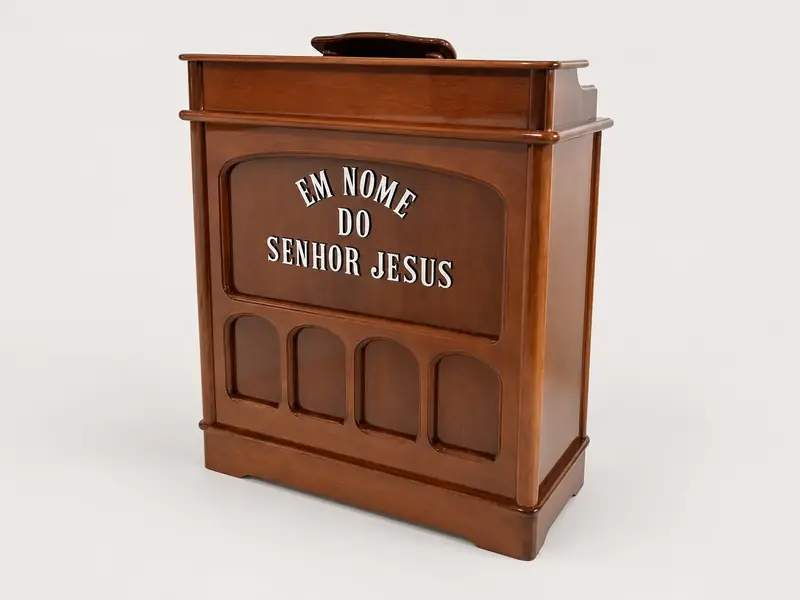
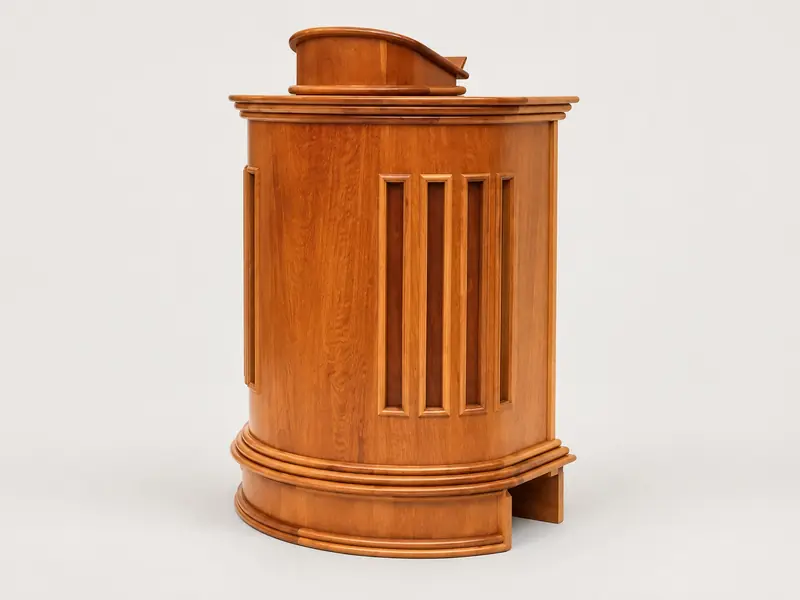
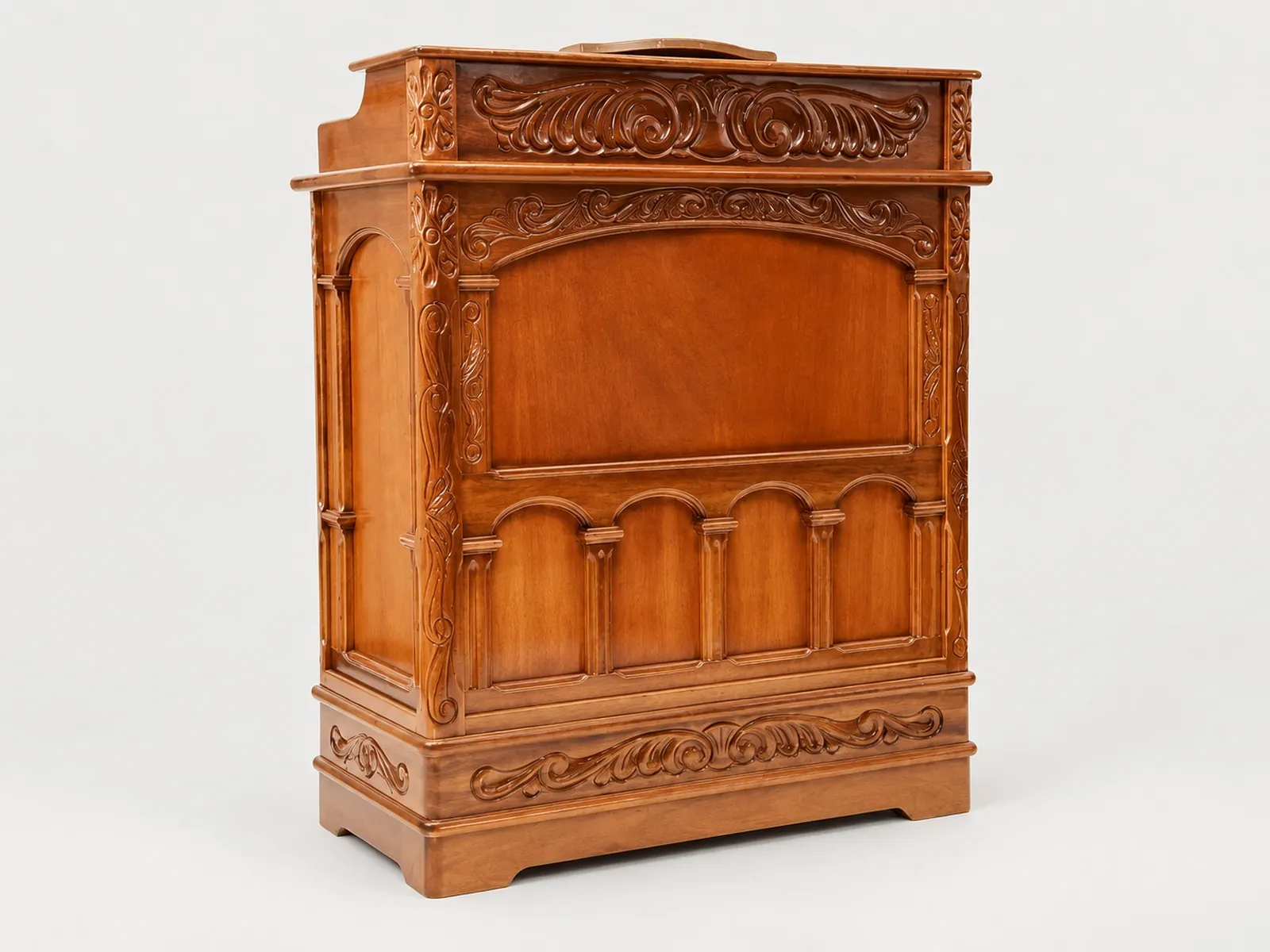
- Straight lines without carving: the straight-line pulpit has a front panel for an inscription and four arched niches; the curved pulpit has a curved front from top to base. They suit modern sanctuaries and straight-lined pews such as the Z-04 and Z-Comfort.
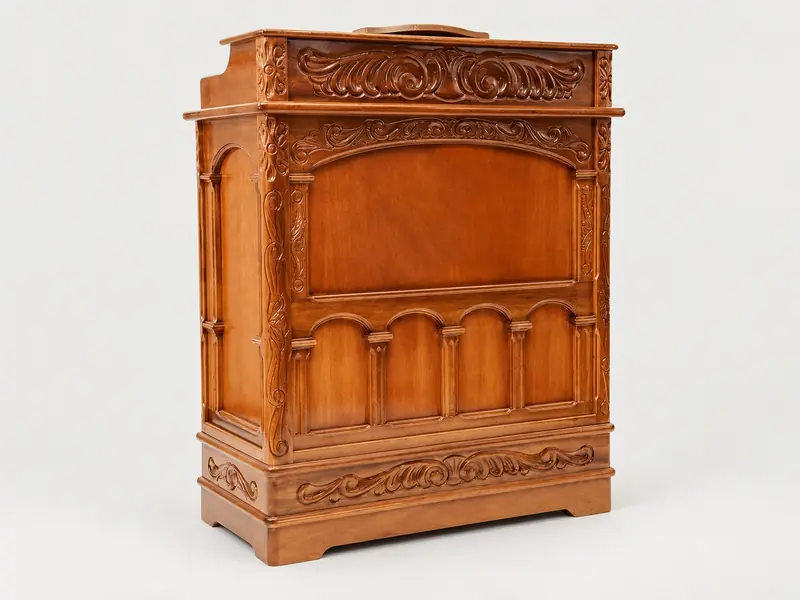
- Gothic: the carved Gothic pulpit has front arches and foliage carved into the frieze, columns, and baseboard; the uncarved Gothic pulpit retains the arches and columns with smooth surfaces.
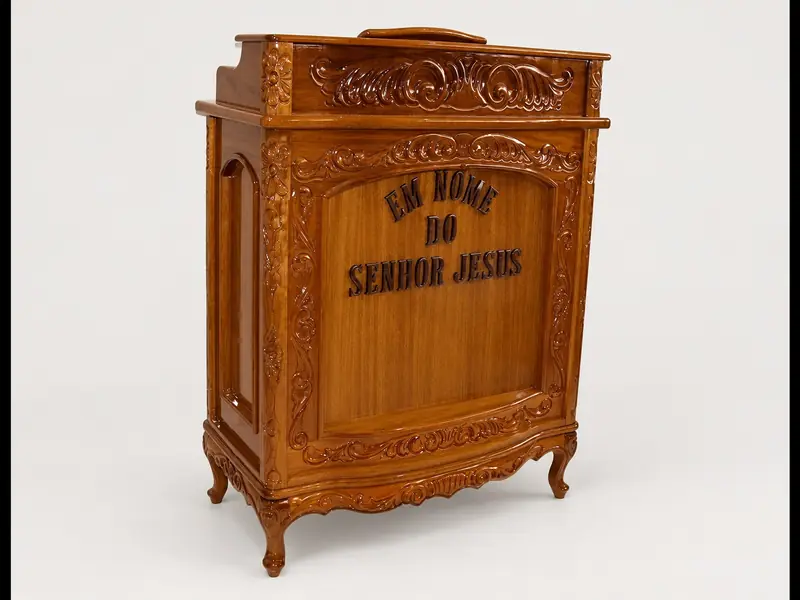
- Provençal: the carved Provençal pulpit has hand-carved Louis XV legs, a shaped apron, and carving around its entire perimeter.
- Carved with baseboard: the carved pulpit with baseboard has a broad front panel for an inscription and carved foliage around the edges.
There is also the altar table and pulpit, with a curved, enclosed front and a U-shaped opening at the back: the speaker stands inside the curve.
Wood, acrylic, or glass pulpits
Searches also bring up acrylic and glass pulpits. They have a light, transparent look, suit church stages with bands and theatrical lighting, and leave the preacher more visible. Wood has a stronger presence in the altar area, accommodates carvings, inscriptions, and symbols, and can match the finish color of the pews and other chancel furniture.
The choice depends on the style of worship and the sanctuary. Móveis Zanovello works exclusively with Lyptus wood, and that is where the factory can help.
Height, size, and placement in the altar area
The right pulpit height depends on the preacher and the height of the altar platform itself. That is why Zanovello specifies the height and top dimensions in the proposal, based on information from the church:
- the approximate height of the person who uses it most;
- the height of the step or platform where it will stand;
- the available width in the altar area and the position of the chairs;
- any text or symbol to be placed on the front.
For placement, the general rule is visibility: the piece needs to be visible from every row and allow the speaker to see the congregation. In Catholic churches, the GIRM calls for the ambo to be arranged so readers and ministers can easily be seen and heard. When the altar area has steps or a balustrade, pulpit railings, such as the turned railing and Gothic railing, complete the ensemble across the width of the altar area.
Pieces surrounding the lectern
A pulpit rarely stands alone. Behind or beside it are chairs for the presiding minister and guests, and sometimes a microphone stand for testimonies and readings. When these pieces share one design, the altar area has a cohesive look. The PB01 carved button-tufted chair, for example, pairs with the Provençal pulpit and the carved Gothic pulpit, while the microphone stand has vertical grooves that complement straight-lined designs.
Zanovello lecterns and ambos
For parishes and chapels, the ambo range offers different designs:
- Ambão Oval: curved front with vertical grooves and clean lines.
- Ambão Videira: grape clusters and vine leaves carved at the top.
- Ambão Sextavado Paz e Vida: six sides, a dove in relief, and the words Paz e Vida.
- Reading lectern: narrow column with an applied cross and a two-wing top.
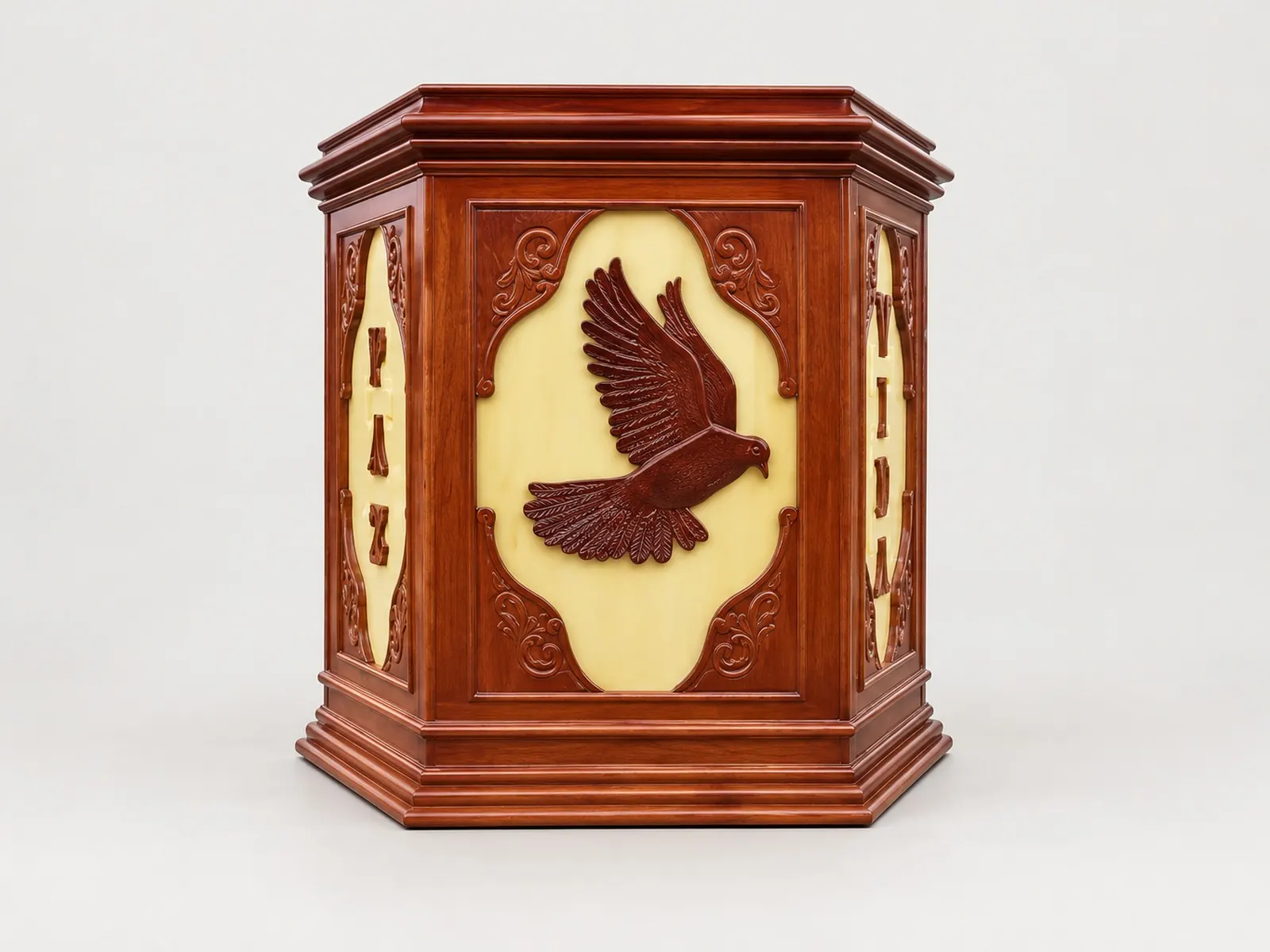
The pulpit can feature the church's symbol or a phrase on its front panel. Photos of the straight-line and Provençal pulpits show the phrase "Em nome do Senhor Jesus" in applied lettering. The wording is agreed on in the proposal before manufacturing.
How to order them with the pews
Pulpit and ambo orders are handled through Zanovello's accessories WhatsApp contact. Send the model, a photo of the altar area, the church's city, and any wording for the front. You will receive a written proposal with the price and lead time.
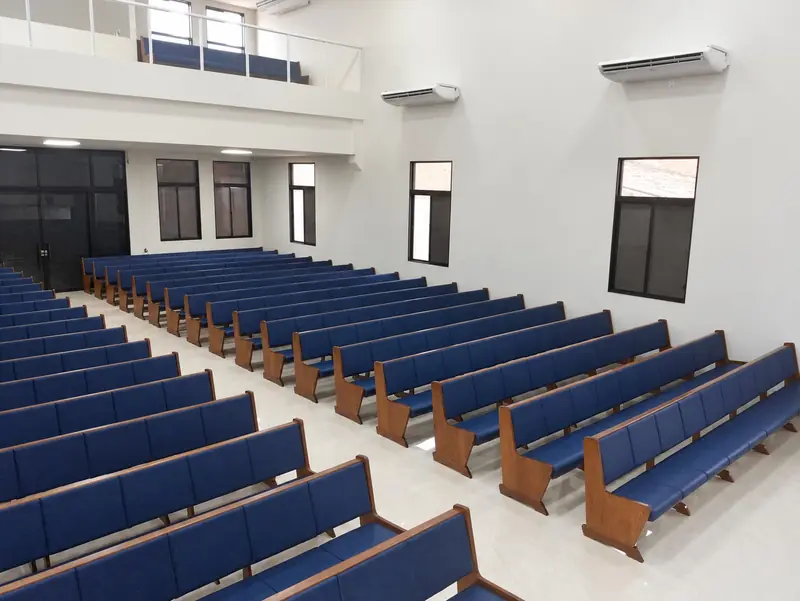
If the church is also replacing its pews, the piece can be included in the same project with the same finish color. Start with Build your quote for the pews and request the pulpit too. The pew proposal includes each pew's dimensions, the lead time, and a 7-year written warranty, with a minimum order of 20 pews. See all models under church pulpits and altar and ambo.