The ambo is a fixed place in the sanctuary of a Catholic church from which the readings, responsorial psalm, Gospel and often the homily are proclaimed. This is why it is called the table of the Word. It is usually a prominent, stable piece made of wood or stone, positioned so that the entire assembly can see and hear.
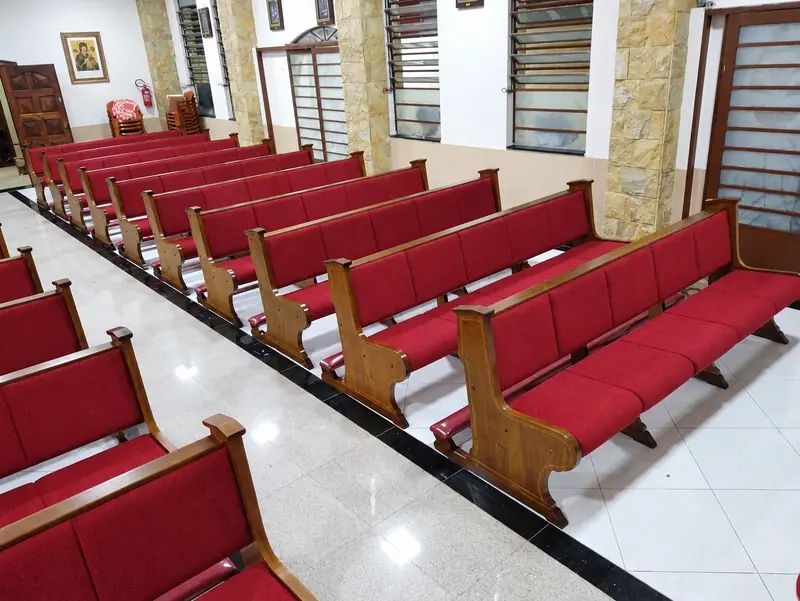
Móveis Zanovello manufactures ambos in Lyptus® (eucalyptus hardwood) at its own factory in Floreal/SP, alongside the pews it has made for parishes since 1965. This article explains what an ambo is according to the General Instruction of the Roman Missal, how it is used during Mass and how to choose a model.
What ambo means
The Priberam Dictionary defines ambo as the "place in a church's sanctuary, usually a platform or pulpit, from which liturgical texts are read," and gives its likely origin as the Greek *ámbon*, meaning a rounded projection or elevation.
The liturgical reference is the General Instruction of the Roman Missal (GIRM), the document governing the celebration of Mass in the Roman Rite. GIRM no. 309 states that the dignity of the Word of God requires a suitable place in the church from which it is proclaimed, toward which the faithful's attention naturally turns during the Liturgy of the Word. It adds that this place should ordinarily be a fixed ambo, rather than a simple movable lectern.
How the ambo is used during Mass
GIRM no. 309 also defines how the ambo is used:
- The readings, the responsorial psalm and the Easter Proclamation are proclaimed from it;
- The homily and the intentions of the Universal Prayer, or Prayer of the Faithful, may also be delivered from it;
- The dignity of the ambo requires that only a minister of the Word approach it;
- A new ambo should be blessed before liturgical use, according to the rite in the Roman Ritual.
GIRM no. 118 also mentions the ambo when listing what should be prepared before Mass: the Lectionary is placed at the ambo.
The expression "table of the Word" comes from GIRM no. 57, which says that the table of God's Word is prepared for the faithful in the readings. Just as the altar is called the table of the Lord (no. 296), the ambo is the place of this other table.
Ambo, pulpit, and lectern
All three terms are used in Brazilian churches, sometimes for the same piece. The difference lies in their use:
- Ambo: a term used in Catholic liturgy. It is the fixed place in the sanctuary for proclaiming the Word, as described in the GIRM.
- Pulpit or tribune: terms more commonly used in evangelical churches for the furniture from which sermons are preached. In older churches, the pulpit was also an elevated platform in the nave used for preaching.
- Reading lectern: a lighter piece that holds a book. It is used for announcements, by those leading the singing, and in chapels and prayer rooms. In a church, the GIRM recommends that readings be proclaimed from a fixed ambo.
For the full comparison, including Zanovello models, see pulpit, tribune or ambo.
Where the ambo goes in the sanctuary
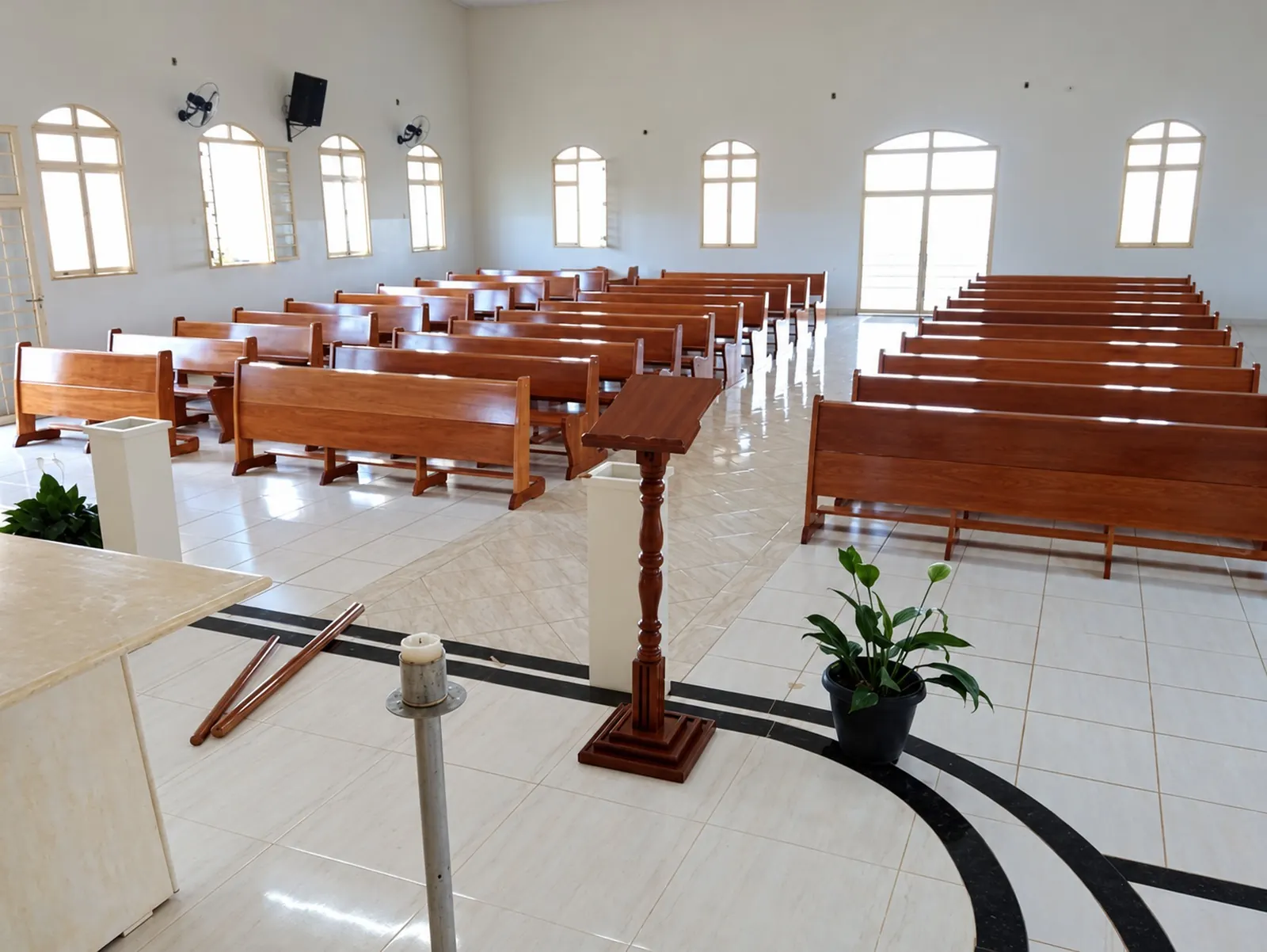
The sanctuary is the area where the altar stands, where the Word is proclaimed and where the priest, deacon and other ministers exercise their ministry, according to GIRM no. 295. The ambo belongs in this space, together with the altar and the presider's chair.
GIRM no. 309 calls for the ambo to be positioned according to the layout of each church so that ordained ministers and readers can be clearly seen and heard by the faithful. In practice, this means considering three design factors:
- Visibility: the ambo must be visible from every row, including the sides and the gallery.
- Sound: the microphone and speakers should be planned together with the ambo's location.
- Circulation: readers need to reach and leave the ambo without crossing the path of those at the altar.
To learn about the other pieces in the sanctuary, read sanctuary, altar and credence table.
Materials and styles
The GIRM does not specify a material for the ambo. No. 294 calls for the building's arrangement to form a coherent whole and for the beauty of the space and its furnishings to foster devotion. That is why many parishes choose an ambo, altar, credence table and chairs in the same wood and finish color.
The most common styles:
- Solid, plain body: straight or curved lines without carving, for modern sanctuaries.
- Carved: with symbols such as a vine, dove or cross, for traditional sanctuaries.
- Narrow column: lightweight and compact, for chapels and small spaces.
Ambos manufactured by Zanovello
All Móveis Zanovello ambos are made of Lyptus, a plantation-grown eucalyptus, the same wood used for the factory's pews. The height, width and reading surface angle are agreed upon in the proposal, and the finish can match the color of the pews.
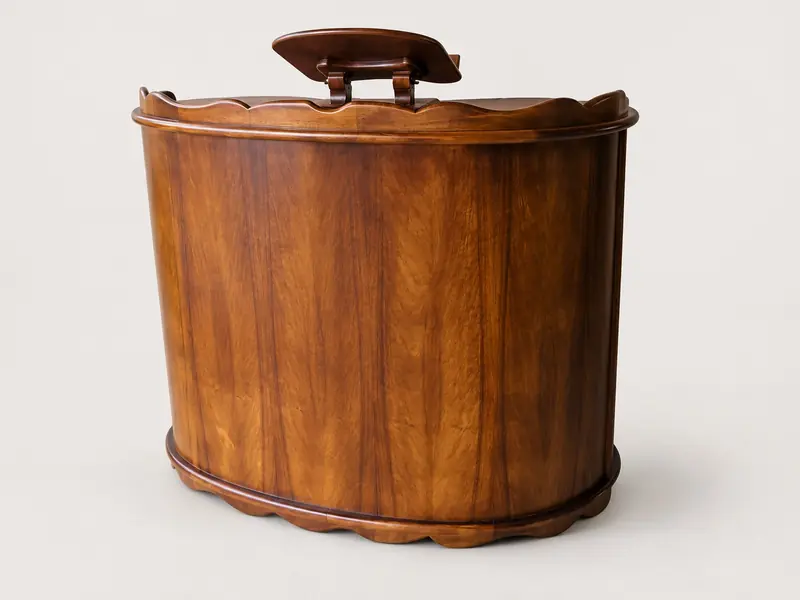
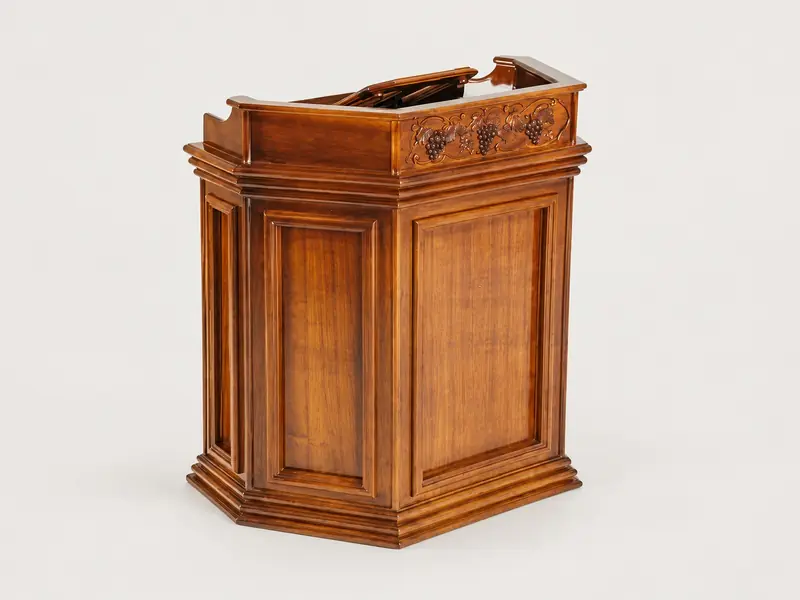
- Ambão Videira: a three-sided faceted front, raised panels, and grape clusters and vine leaves carved at the top.
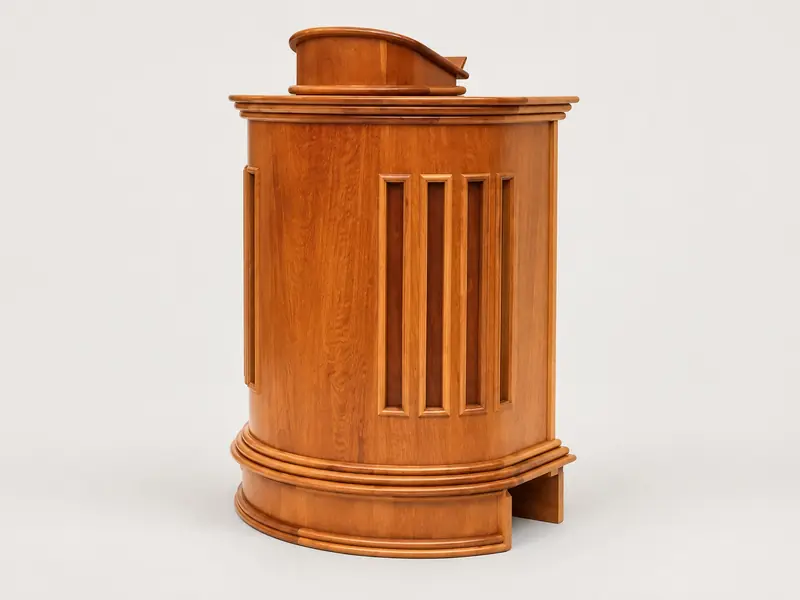
- Ambão Oval: a curved front with four vertical grooves and clean lines for traditional or contemporary churches.
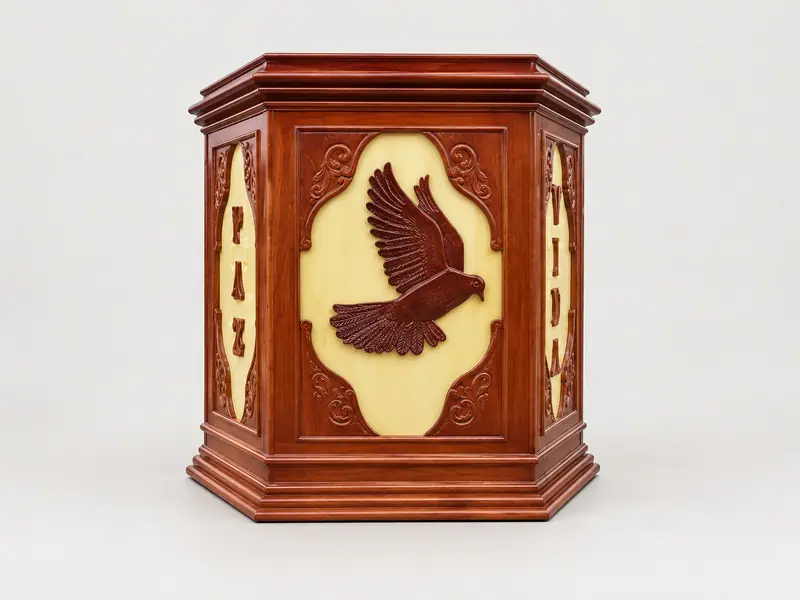
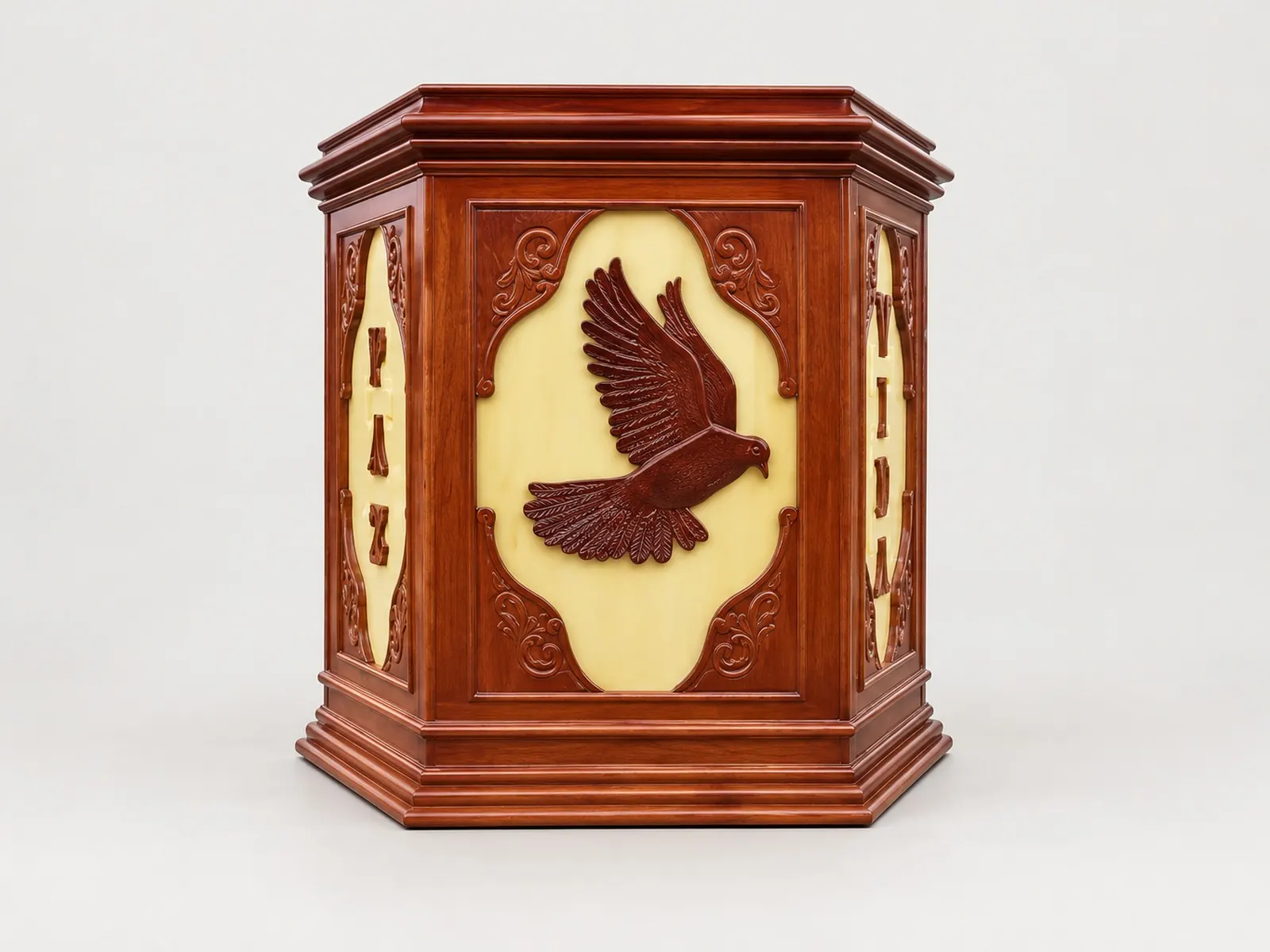
- Ambão Sextavado Paz e Vida: six sides, a dove with outstretched wings carved on the front, and the words PAZ and VIDA on the sides. It has the most elaborate carving.
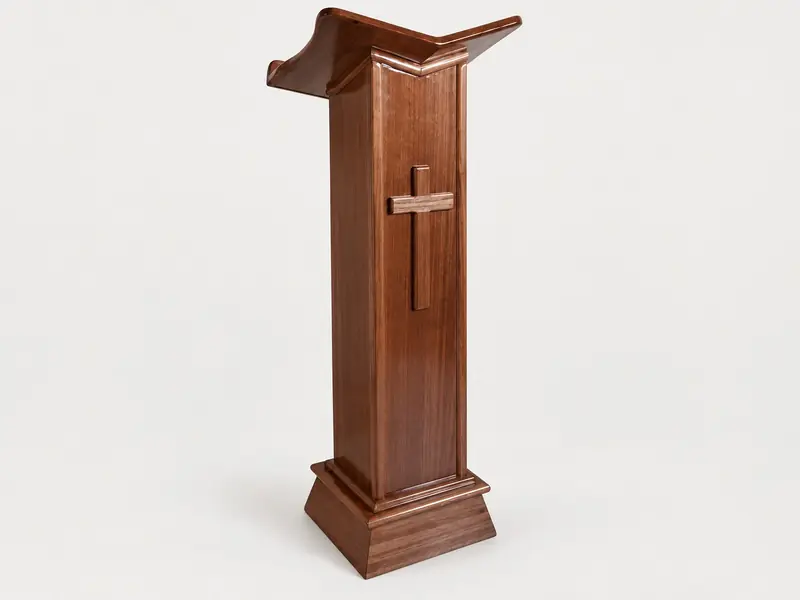
- Reading lectern (ambo): a narrow column with an applied cross, a top with two sloped sections and a shelf at the back. It is the lightest and most compact model.
Symbols can be discussed as part of the proposal if the parish would like a different design or its own monogram. See all the pieces under altar and ambo.
Next step
To order an ambo, start by contacting our accessories team on WhatsApp. There is no minimum order: send the model name, approximate sanctuary dimensions and the church's city. Our team will send a written proposal with pricing, dimensions and lead time. If the parish is also replacing its pews, request everything as one project through Build your quote, with a 7-year written warranty on the pews.